skip to main |
skip to sidebar
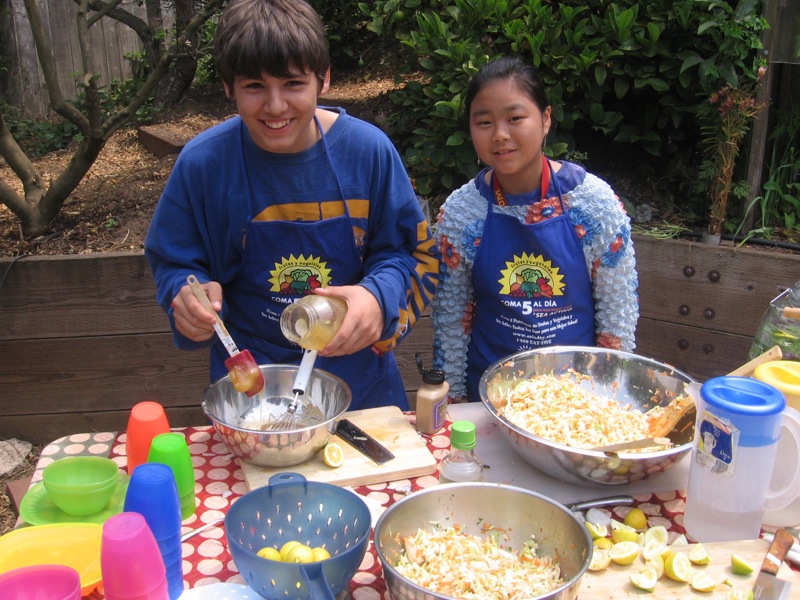
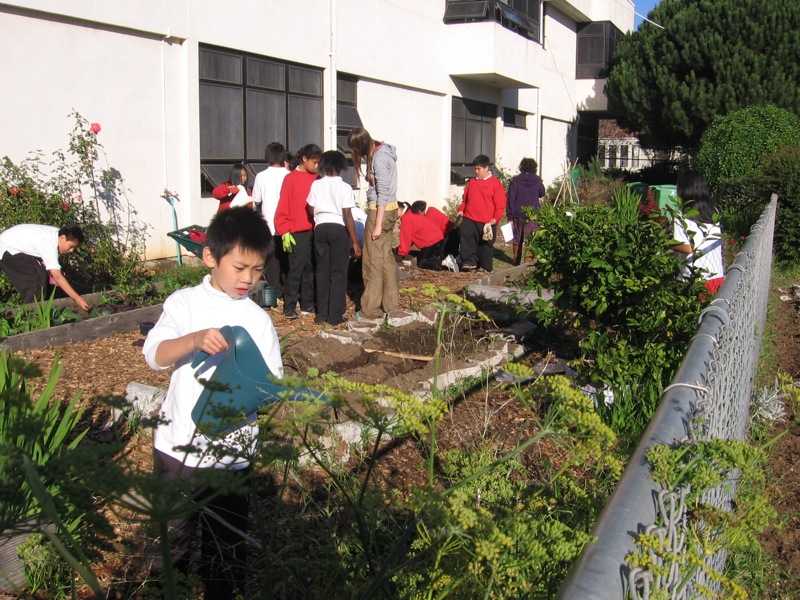
 Urban Sprouts' Summer Program at the Garden for the Environment is in full swing! We have more youth at work than ever before - 8 high school youth are leading the program for 18 middle school youth. We adults can now sit back and watch them go . . . The two youth Garden Managers set up and run all the gardening activities, and the rest of the youth staff and participants show off their cooking talents, gardening knowledge, and general ecological role model-ness daily. We are so impressed!
If only the whole world would follow the example of these amazing young people -- in their community-mindedness, their dedication to caring for the environment, and their desire to make the world a better place! Plus, this group of actors and comedians has me tearing up with laughter every day. Who can ask for more! A special shout out to our inspiring youth staff members Anthony, Augie, Jessica, Julius, Lupe, Michael, Sophia and Walter!
More photos HERE and HERE!!


 Oakland's own Mariposa Baking let us know that we are one of the organizations they have chosen to receive support from sales of their Peace Cakes! Mariposa says:
Mariposa's apple spice peace cake was inspired by "war cakes" which were created during WWII when eggs and other commodities were rationed yet people still ways to bake cakes without standard cake ingredients.
We wanted to create a gluten-free vegan cake, which also meant developing a delicious recipe with non-traditional ingredients. We call it a peace cake because a portion of sales goes towards organizations that improve our communities.
Thank you for thinking of us! Yum!
 Last Sunday was a clear warm November day. It could not have been a more enjoyable day to meet the Dare family at June Jordan to break ground for their first garden plot at the school site.
The Dare family has joined Urban Sprouts in the multicultural garden project and planted a winter garden of Pac Choi, Broccoli Raab and Snow Peas! It was a great experience to get to know JJSE student, Marcus, amidst the warmth of his family and to watch them work together to create this shared garden. We look forward to the family story about the chosen crops and the recipe to follow for the harvest!
 Urban Sprouts is excited to be working with parent groups at their schools. While our programming is effective with youth at school, it is strengthened when parents and families also grow their own food. This year we are looking forward to working with families to develop culturally specific gardens that reflect the rich food heritage and personal stories of the families at our schools!
The other day a June Jordan parent, Romana, came out to plant a winter garden. We talked about the preparation of the crops, Dia de Los Muertos, and Thanksgiving recipes. I look forward to learning more from her about food and cultivating!
If you feel like I do, today’s political attack ads and gloomy financial news on TV have you hungering for meaning. For meaningful conversations about the needs in our families and our communities, and for a meaningful way to make a difference.
 A new era is here: we can no longer depend on cheap food made from fossil fuels. It’s up to us, now, to push this movement over the edge: the movement to make fresh, healthy, and locally-grown food a reality for all of our families and our communities.
Remember, our youth are our future green farmers. I’d love for you to see the young people in an Urban Sprouts class. In the garden, they are laughing and smiling, reaching into the soil, pulling out bright orange carrots, and munching on them. They are talking: “organic is cool,” and “mmm . . . crunch, crunch“ can be heard as they stop for a break from the hard work of digging.
When worries creep into my mind—high gas and food prices, and the absolute mess of our fossil fuel-gobbling food system—the tranquility of the school garden and the murmur of cheerful young voices always snap me out of it.
We have SO much work to do! School gardens can transform our nation. School gardens fulfill our youth’s hunger for fresh and healthy food, and for meaningful work that makes their schools and neighborhoods safer, greener, and stronger. School gardens drive the demand for food grown by local farming families right here in our region. In fact, school gardens can help us unlock the big three issues we face: health, dependence on oil, and global warming.
That’s why today, I am inviting YOU, right now, to CLICK HERE and give a gift of $35, $50 or $125.
 You can make a difference too, with your investment in our youth—the future of a fresh and local food system for our nation.
I’d like to tell you more about how your support for Urban Sprouts will make a real difference for urban youth. CLICK HERE TO READ MORE -->
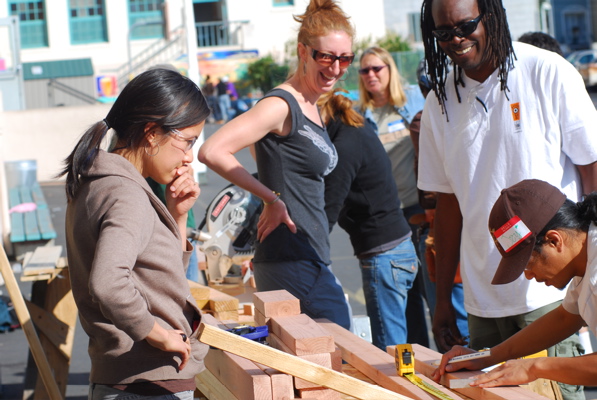
 Urban Sprouts was proud to be part of the San Francisco Green Schoolyard Alliance's 3rd Conference on October 10th-11th. The weekend was like a party for the school garden movement — new things to learn (photos at right and below), like cob building, mosaics, carpentry, and seed saving, and time to spend with old and new friends inspired by our shared mission!
 Friday night we heard speaker Richard Louv, who gave us one great pep talk about how our work is changing the world! Louv's book, Last Child in the Woods, describes how youth are suffering psychologically from a lack of connection to nature, which he names nature-deficit disorder.
 Louv gave us many powerful examples of how school gardens change lives. He told us that experiences in nature are therapeutic for children with hyperactivity disorders and depression, and they develop executive functioning (self-regulation or self-discipline) in kids. He described studies showing that paved schoolyards bring out aggressive games and leadership styles, namely bullying, while natural play settings bring out imaginative play and creative and collaborative leadership in children. In fact, unstructured nature-based play is so good for children, Louv recommended it as the best way to get your child to a top college. Wow! There wasn't a dry eye in the place.
On Saturday, I led a workshop titled, The Real Impacts of School Gardens: How to Make Change and Measure It. I had 3 whole hours — enough time to lead the group through our Garden-based Education Model in depth, to really understand the model and try it out on their own programs. I had enough time to create a nice flow during the workshop, complete with group games, reflection, and drawing activities! It was a great group and we all learned a lot from each other.
The response to Louv's work and the popularity of my workshop showed how much the school garden movement has matured. We are not just building school gardens because they are nice, pretty, and make kids happy. We are creating major social change. In the last few years, we have shown that school gardens impact children individually — developing children socially and psychologically, helping them succeed in school, and changing their behaviors as they eat more vegetables, exercise more, and become environmental stewards.
But, now we are seeing that school gardens do much, much more. They transform schools from their prison-yard look to a green and inviting environment, drawing families in, to make schools stronger. They make our neighborhoods cleaner, greener and friendlier. AND, school gardens teach our children to be our nation's future farmers. Our youth will enter the green collar economy in a few years, in a world where we will have been forced to design a new food system that is not dependent on fossil fuels. Our children will be growing and consuming local food, right here in our neighborhoods. And you saw it here first, in San Francisco's own schoolyards!
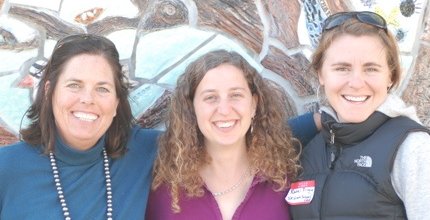
 Above: SGFSA Conference organziers, Arden, Sharon & Rachel
Photos by Jennifer Thacher
Dear Friends,
If you feel like I do, today’s political attack ads and gloomy financial news on TV have you hungering for meaning. For meaningful conversations about the needs in our families and our communities, and for a meaningful way to make a difference.
A new era is here: we can no longer depend on cheap food made from fossil fuels. It’s up to us, now, to push this movement over the edge: the movement to make fresh, healthy, and locally-grown food a reality for all of our families and our communities.
Remember, our youth are our future green farmers. I’d love for you to see the young people in an Urban Sprouts class. In the garden, they are laughing and smiling, reaching into the soil, pulling out bright orange carrots, and munching on them. They are talking: “organic is cool,” and “mmm . . . crunch, crunch“ can be heard as they stop for a break from the hard work of digging.
When worries creep into my mind—high gas and food prices, and the absolute mess of our fossil fuel-gobbling food system—the tranquility of the school garden and the murmur of cheerful young voices always snap me out of it.
We have SO much work to do! School gardens can transform our nation. School gardens fulfill our youth’s hunger for fresh and healthy food, and for meaningful work that makes their schools and neighborhoods safer, greener, and stronger. School gardens drive the demand for food grown by local farming families right here in our region. In fact, school gardens can help us unlock the big three issues we face: health, dependence on oil, and global warming.
That’s why today, I am inviting YOU, right now, to CLICK HERE and give a gift of $35, $50 or $125.
You can make a difference too, with your investment in our youth—the future of a fresh and local food system for our nation.
I’d like to tell you more about how your support for Urban Sprouts will make a real difference for urban youth. Urban Sprouts leads garden-based education classes at public middle and high schools, and in the summer at a local community garden.
 Our school garden programs do more than help youth to eat more vegetables and to take care of the environment. Our school gardens change the way young people feel about themselves and their communities. The school garden nurtures self-esteem and shows young people that they can change the world.
Be ready – you will be as moved as I am when you read the words of our city’s own young people, as they make real changes in their lives:
“Eat ‘Food,’ Not too much, Mostly Plants.” I don’t eat so much candy, chips and soda. I try to eat more fruits. I told my mom about a lot of things I learned here, and now she goes to the grocery store and buys more fruits and veggies.
I learned how to use the compost bin and about how everything affects our earth. I want to make sure we reduce, reuse, and recycle. I think that it impacted the middle school youth to do that at home and share with other people, because it impacted me, too.
I am more conscious of the waste I produce, especially petroleum products, and really try hard to reduce and reuse.
 I want to be eating more greens EVERYDAY, and less sugar. I plan on sharing my knowledge about nutrition with my parents and brother.
Now I eat more healthy things and want to grow a garden in my backyard.
I’m about to plant my own veggies, so I won’t have to shop! (As much.) I plan to teach my family more about soil health, and about nutrition (how our health relates to the world’s health.)
I want to recycle more and compost instead of put it into the landfill.
My recycling habits have changed and I have already started to teach my family and friends.
New research shows that the difference between youth engaged with nature and youth staring at a TV screen is everything we hope for our children: self-confidence, inner strength, leadership, cooperation, and self-control.
Young people will tell you how much Urban Sprouts gave their talents and strengths a chance to shine:
Everyone in the program was touched and learned new things in different ways.
There were so many different activities around the garden so each person could find their strength or something they really enjoy doing (like the pros at shoveling manure and compost!)
 I liked taking the younger youth on the garden tour because you can tell that they were getting excited and wanted to touch and taste everything, and then you get to see all they learned.
When we went on the field trip, myself and other kids were saying that they weren’t going to milk the goats. By the end I heard them talking about how they never did that before, but they did it anyways because they might never get another chance.
I was proud to see and hear youth sharing stories and their knowledge about the program with their families.
But, not just any school garden program can achieve these inspiring results for youth and communities. You need the right ingredients, or program elements, to achieve change. That’s why Urban Sprouts uses a research-tested program model, or ‘recipe for success.’
As you may know, Urban Sprouts grew out of a doctoral thesis project conducted during the 2003-04 school year. This theory-based research has guided us from the beginning, ensuring our high level of effectiveness.
 Since 2003, over 1,700 youth have benefited from hands-on garden learning by growing, harvesting and eating their own vegetables. We’ve expanded to reach over 750 youth each year at six public schools: Aptos Middle School, Martin Luther King, Jr. Middle School, International Studies Academy, June Jordan School for Equity, San Francisco Community School, and Ida B. Wells Continuation High School. At these schools, over 60% of youth are from low-income families and over 95% are youth of color.
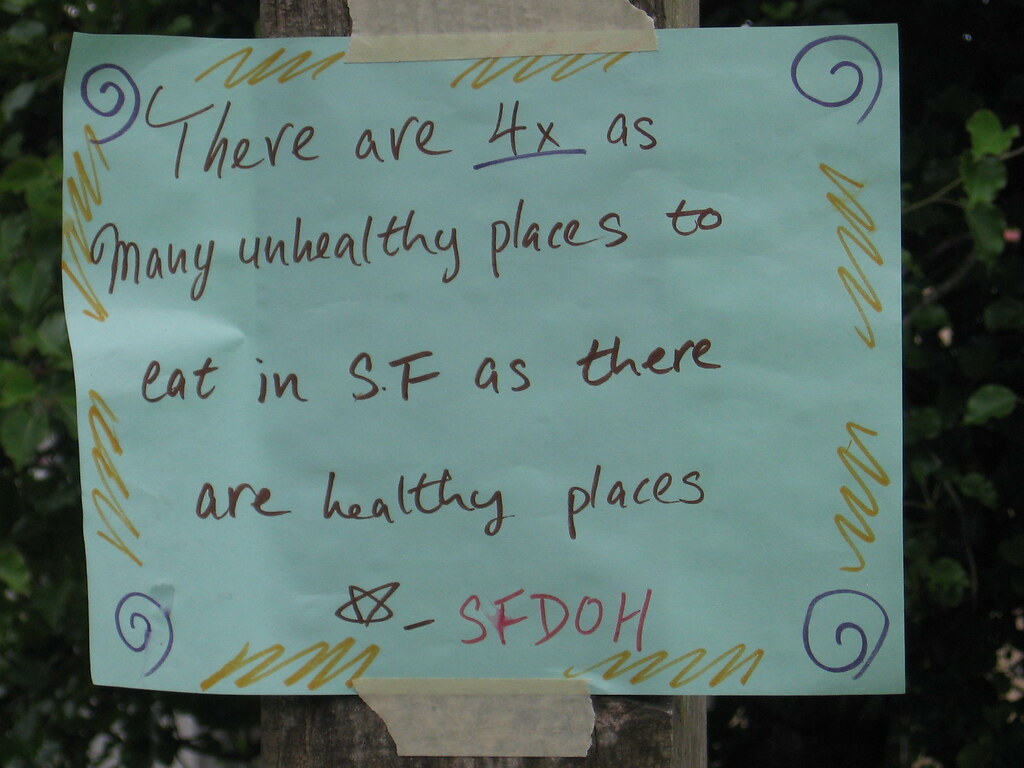
Plus, families in our urban neighborhoods have to walk miles to buy fresh and locally-grown food. San Francisco’s southeast communities have four times more fast food restaurants and liquor stores than they have grocery stores.
That’s why Urban Sprouts has partnered with school families to change the food environment—by bringing fresh, healthy and organic food to youth and their families right at school.
Now, Urban Sprouts supports youth and their families in four ways:
- Garden-based Science class: Over 750 students experience hands-on lessons in environmental science and nutrition, garden work projects, and cooking projects, led by Urban Sprouts’ Garden Educators together with classroom teachers and volunteers.
- Summer Program: Each summer 20 youth enjoy two weeks of intensive gardening, cooking, eating and learning about a healthy food system. At San Francisco’s Garden for the Environment, youth learn skills, prepare a healthy lunch every day, and take home their new learning to help their families eat better and protect the environment.
- Family Programs: Our parent workshops are growing into Internships for school family members: parents will grow their own cultural foods in family plots within school garden sites! Interns receive resources and support to make family food access a reality.
- School Food and Farm Connection: Farm field trips show youth a healthy food system: goats, chickens, and plants work together in natural cycles, and food travels a short distance to reach our plate. Urban Sprouts helps our school partners advocate to bring local and fresh food into school cafeterias, through partnerships at the local, state and regional levels. Our farm-to-school partners show potential results like regional environmental health and state-wide economic growth.
And now, this is where you come in: we need you to help us reach our vision!
CLICK HERE to make an investment in Urban Sprouts today, and help us build a world where all youth and families can enjoy the fresh, organic food and the connection to nature we need to live healthy and fulfilling lives.
Please join us in this meaningful work, by sending your donation today.
Thank you very much.
Sincerely,
Abby R. Jaramillo, abby AT urbansprouts DOT org
Executive Director
P.S. We need you! Along with your gift, we’d love your ideas! You can also bring your company out for a garden volunteer day or serve on our board. Email me and I'd love to talk more!
 Last Friday I attended the Western Region Assembly for Farm to School, hosted by the lovely Michelle Ratcliffe at Ecotrust in Portland, OR. She/Ecotrust serve as the western region lead for the National Farm to School Network.
Sound like another boring meeting? NOPE! This was truly inspiring and exciting—more like a party than a meeting! First of all, many states arrived with GOOD NEWS! (Watch out San Francisco - we want to be cutting edge, but we are SO behind the times!) Representatives from Oregon, Washington and Montana shared new policies that they have passed in support of school gardens and farm-to-school programs. Their states are MAKING IT HAPPEN! Students are learning to love veggies by growing their own food, and school cafeterias are serving products grown and prepared fresh from their local farms, while strengthening the local economy at the same time. We even got to taste some local school food. Yum!
The major theme of the meeting was, with all this energy and forward momentum, how do we "think like a region" and support each other to make our efforts even stronger and more impacting! Any thoughts, all you westerners?
 Also, I finally met in person many of my role models, like Rose Hayden-Smith of Victory Gardens fame, and Sandy Curwood, Director of Food Services for the Ventura public schools (who has made huge strides in getting local farms' fresh food into the school cafeterias!). Plus I spent time with many other amazing Farm-to-Schoolers representing California, Washington, Idaho, and Montana. San Francisco was quite conspicuously missing, while Davis, Santa Cruz, and Los Angeles were out in full force!
For a great overview of the research to date in support of school gardens and farm to school programs follow these links. (If anyone tells you it's not working, don't believe em!!)
And, join our new Facebook group to keep in touch! Props to everyone who is creating the Farm to School revolution!
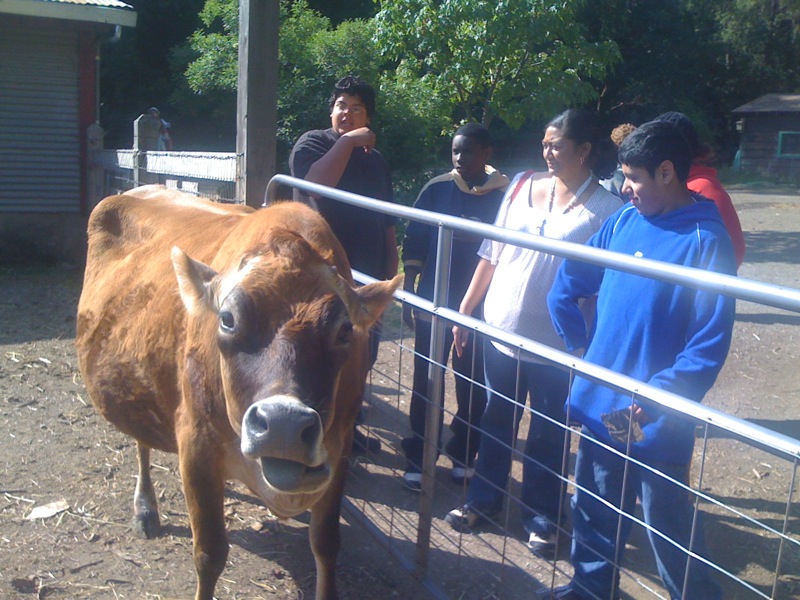
 Yesterday the June Jordan Food class took a trip to Hidden Villa ranch, an educational organic farm and ranch. As we drove by the farm fields near the ranch's entrance, a student yelled out, "Look! It's just like the small farms we learned about!" As in, small farms versus industrial farms. I was happy.
Another student had attended summer camp at Hidden Villa recently, at the program for 11-14 year olds. Mr. Olsson (pictured with cow) and I were both counselors there back in the olden days.
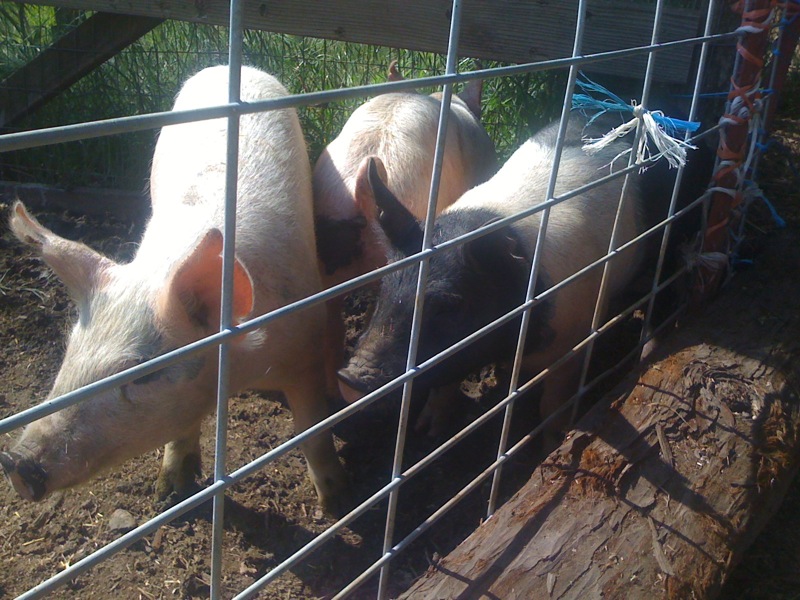
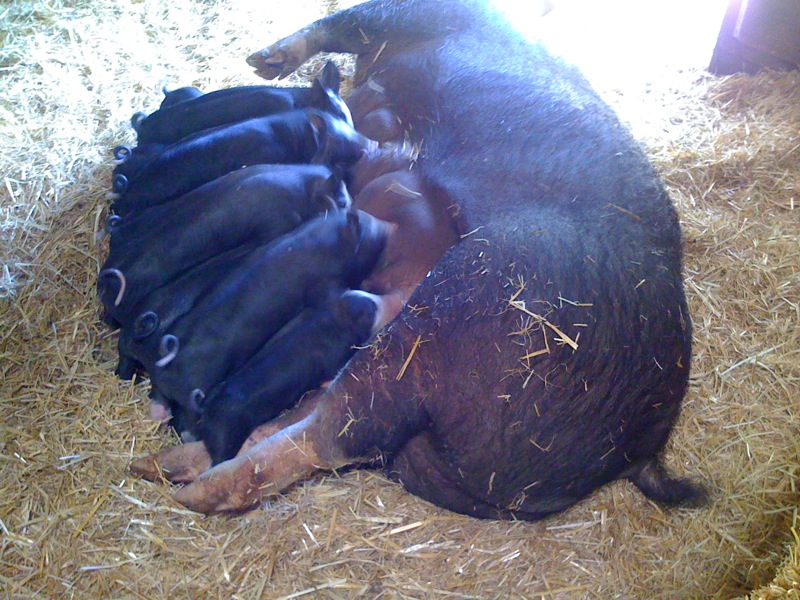
It turned out our group had a lot of knowledge of this place to share! We visited the cows, pigs, goats, sheep and chickens. We laughed a lot at animal antics! We walked in the woods and a student pointed out a banana slug! The garden was full of food crops, and gave us many ideas for crops to grow back at school.


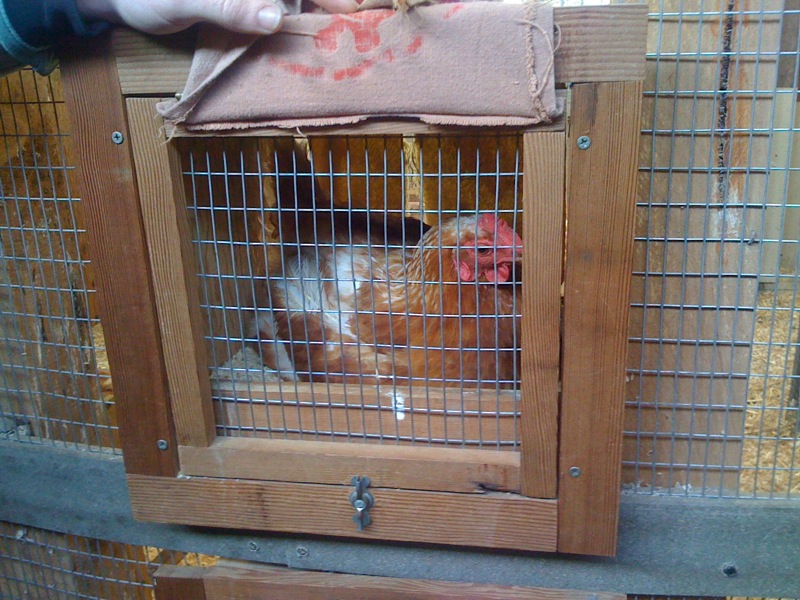
 The baby animals were the CUTEST!! Most of all, we were excited to visit the chickens, to get ideas about our own chickens who will soon move in at June Jordan. First we have lots of work to do to get ready! The chicken coop at Hidden Villa, with its peek-a-boo nesting boxes, gave us some great ideas.

 Click on the last photo to see more!
 Making yogurt at home is so easy you won't believe it!
Yogurt is a cultured milk product. We simply add a starter culture (pre-existing plain yogurt) to milk, and give it the proper environmental conditions that allow the culture to reproduce. The starter yogurt has all sorts of beneficial bacteria (such as the famed Acidophilus) that eat the sugar in the milk, and in a wonderful act of alchemy, cause the protein in the milk to coagulate and thicken - yielding that wonderful, creamy yogurt we crave. It is a refreshing treat with homemade granola or with lemon curd (pictured, left).
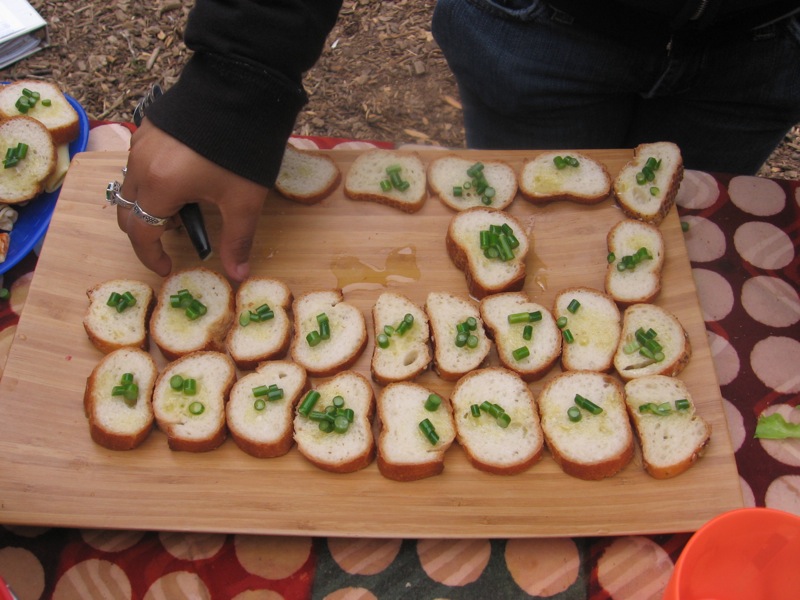
Once you have yogurt, you can also make a spreadable yogurt cheese by straining it for a few hours through a colander lined with muslin or cheesecloth. I like to use it as a sour cream alternative, or I add salt and herbs and spread it on toast. Make sure you save a little leftover yogurt so you can use it as your starter for your next batch.
Your yogurt will depend, of course, on the milk and yogurt you use, and the exact set of conditions you subject them to (mainly temperature and time). It'll take a little bit of trial and error, but soon you'll be producing your own delicious yogurt!
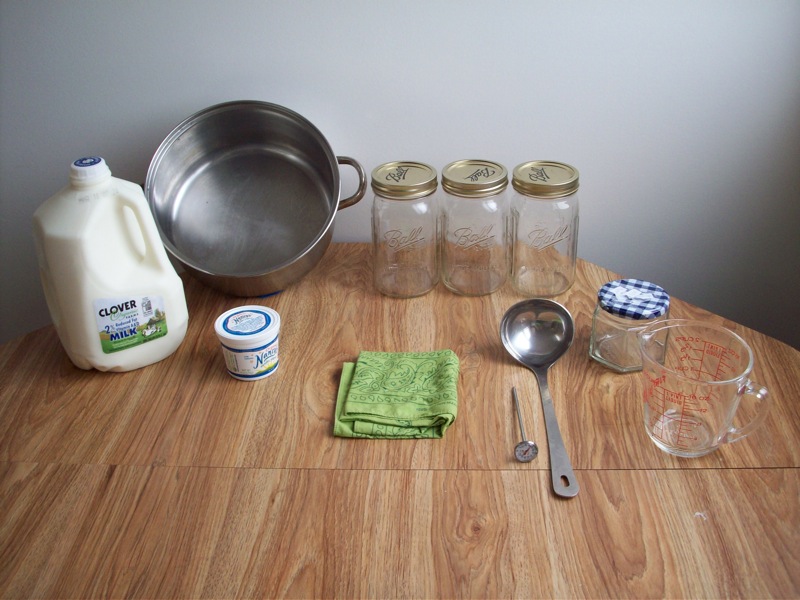
Ingredients:
- Milk: for best results, I recommend organic milk that is at least 2%, and NOT ultra-pasteurized (a pasteurization process at extremely high heat, which damages the milk structure). Back when I lived at Hidden Villa, we made yogurt from the whole Jersey cow milk that we had in abundance. It was like a thick, creamy custard; it was incredible. Now, in my non-farm life, I really like Clover 2% or Whole. I once tried to make yogurt with the Safeway Lucerne milk and it didn't turn out properly; the milk became sour and did not coagulate. BUT, that was just one experience.
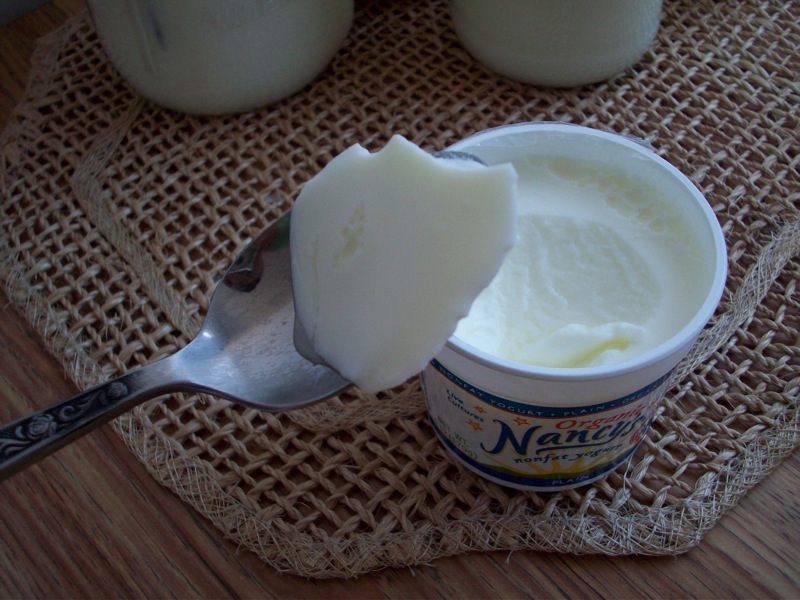
- Yogurt culture: this is simply a small amount plain yogurt that you will use as your starter. For one gallon of milk, I only used a 6 oz container. After trying a couple brands, I have had fabulous results with Nancy's plain non-fat yogurt. My finished yogurt had great flavor and a silky texture.
That's it! But you will also need the following equipment:
- Heavy bottomed pot for heating milk
- Sterile jars for culturing and storing your yogurt. It is extremely important that you sterilize the jars with boiling water, so that you won't have "bad" bacteria or mold that can reproduce in your yogurt.
- Funnel and ladle, or whatever miscellaneous tools you have for transferring milk. Sterilize these too!
- Cooking thermometer: make sure it can measure lower temperatures, as low as 100 degrees Fahrenheit. Not all meat thermometers do this.
- A handkerchief or towel to cover the milk while it cools.
Once you have all your tools ready, let's get started!
 STEP 1: Pour milk into pot and heat slowly over medium heat, stirring occasionally. Once you have reached 162 degrees Fahrenheit, count for 20 seconds and then turn off the heat.
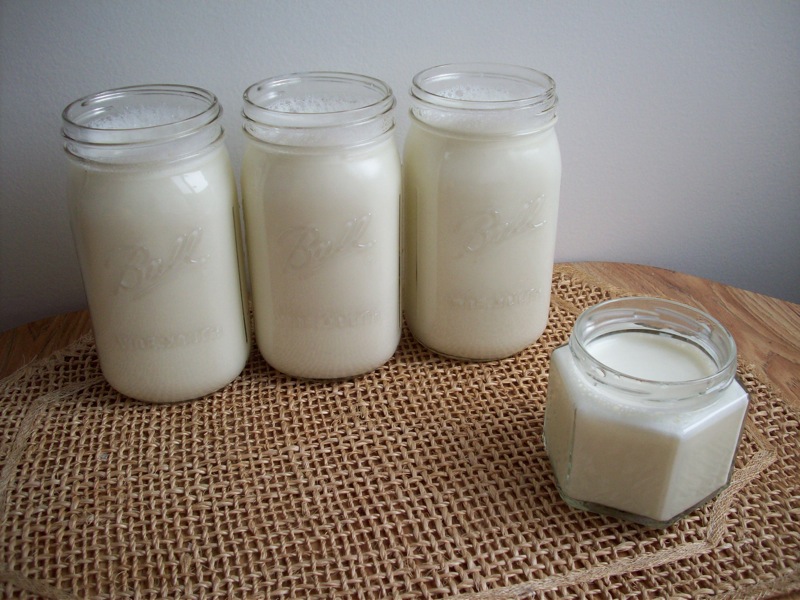
 STEP 2: Transfer the hot milk into your sterile jars. Set the jars aside and cover them with the clean towel or handkerchief while they cool. We need to wait until the temperature is between 100 degrees to 115 degrees Fahrenheit before we add our yogurt culture. Any hotter, it will kill the culture; any colder, and the culture will grow too slowly.
 STEP 3: Once the milk has cooled enough, add a big dollop of your yogurt culture to each jar and stir thoroughly. This is the Nancy's non-fat plain yogurt; they add non-fat milk powder to make it extra thick; I have found that just using high-quality 2% milk yields a yogurt that is just thick enough, but much silkier.

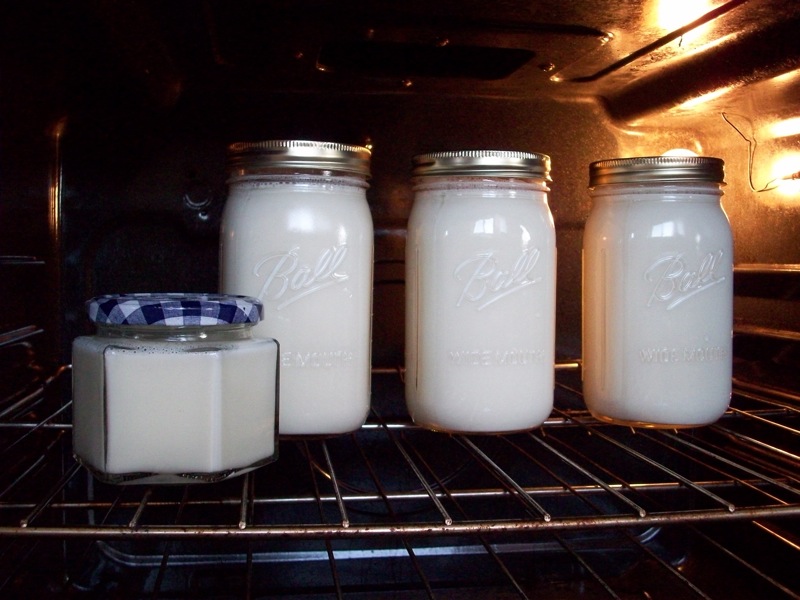
STEP 4: Once you have added the yogurt starter, seal the jars. Now we will let the yogurt sit for 24-36 hours, undisturbed. In order to maintain a more constant temperature, I place the jars in the oven, and turn the oven light on. Make sure you put a sign on the oven so that no one disturbs the yogurt or accidentally turns it on! You can also put the jars in a sleeping bag or an insulated cooler.
 STEP 5: After 24 hours, you can start peeking at your yogurt, gently tipping it over to see if the milk has started to thicken. If, after 24 hours, your milk is still completely watery, you can try giving it a boost by turning the oven on very low heat for a minute or two. Be careful, because too much heat can give the yogurt a gritty texture. If all else fails and the milk does not thicken, you can also use lemon juice or vinegar to make a ricotta-like cheese. (Here is a recipe)
Have fun making yogurt! Feel free to post comments or questions if you need help!
 I am not easily ruffled by celebrity status. There are strata of celebrity and I am often challenged to distinguish who is who and from what they derive their importance. That said, I actually gawked the other day. I was officially star struck. Not so much by the mere fact of popular status but rather in what this gentleman was choosing to do.
It happened as I was enjoying a slice of heaven, also known as of Shaker Lemon Pie, at Mission Pie. Between mouthfuls (maybe even during), I was engaged in a lively conversation about sustainable food systems of course, when a lean fellow walked through the door. In the midst of conversation, one of my associates discreetly leaned forward and said, “notice the guy that just walked in…but don’t stare.” The man in question was at the counter so I was unable to notice him until he turned to leave. That was when it happened. Mid-sentence I stopped talking and took in the full glory of Mr. Benjamin Bratt.
While I do quite like Mr. Bratt’s acting and naturally, he is beautiful, what truly struck me was that Benjamin Bratt is customer of an establishment that melds the worlds of San Francisco food systems, environmental health, and sustainability with darn good pie. Apparently, he is an ongoing customer of Mission Pie.
Of all the places he could choose to go for a slice of pie in San Francisco, he chooses to support a community driven enterprise that “celebrate farmers, bakers, chefs, and all who work together toward a healthful food system.”* Wow. This is a man of distinguished taste who in one fell swoop is supporting community food systems, sustainable farming and youth leadership…and who, when all is said and done, likes a simple and honest slice of pie.
This is what really got me. A person famous for their action is acting in support of his local community…he cares. For that brief moment I witnessed a meaningful personal act, not a big screen one, that spoke of an inner beauty that matches, if not exceeds, the outer.
Thank you for supporting the cause Mr. Bratt!
 The last day of the Summer Program we hosted our most successful Garden Party yet! Youth participants in the program invited their families, friends and teachers to visit the Garden for the Environment and see all the amazing work the youth have done!! More than 75% of youth brought family to the garden - this is HUGE, compared to the less than 10% turnout we usually get for our garden parties during the school year. Teachers from MLK Middle School and June Jordan attended, as did Ross Mirkarimi, District 5 Supervisor.
What incredible work did the youth showcase at the Garden Party? Well, the youth taught us about . . .
 Soil Health: John and Julius showed parents how to save seeds from native plants at the GFE and to sow them in window boxes and home gardens. John gathered the seeds from the garden himself - he learned how to identify mature seed pods ready to be harvested!
Families took home seeds to grow swiss chard, native Hooker's Evening Primrose, and Foxgloves. You can buy window boxes like the ones we used at your local Cole Hardware, or make them from scrap wood like old dresser drawers!
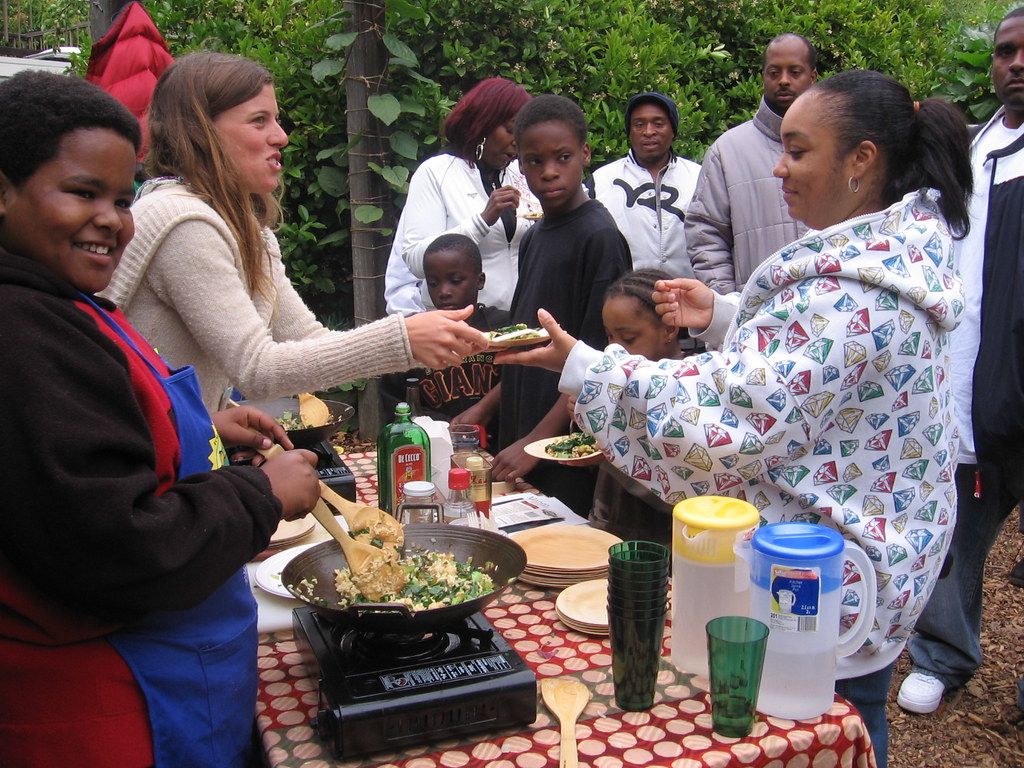
 Eating Healthy at Home: Muawattia, Andre, Delvin and Suzi harvested and prepared veggie stir-fry with rice for everyone, and served it up hot! Everyone enjoyed those fresh and healthy greens.
This group also made a poster listing these ways we can all make healthier choices:
- Exercise and eat healthy including: bananas, strawberries, greens, apples, sweet peas, collard greens
- Choose whole food over processed food. Why? Because you will know what is in your food that can help you and not kill you slowly.
- Replace sweets with another kind of healthy food.
- Check Food Labels before you buy foods.
- You should have no more than 48 grams or 12 teaspoons of sugar in one day.
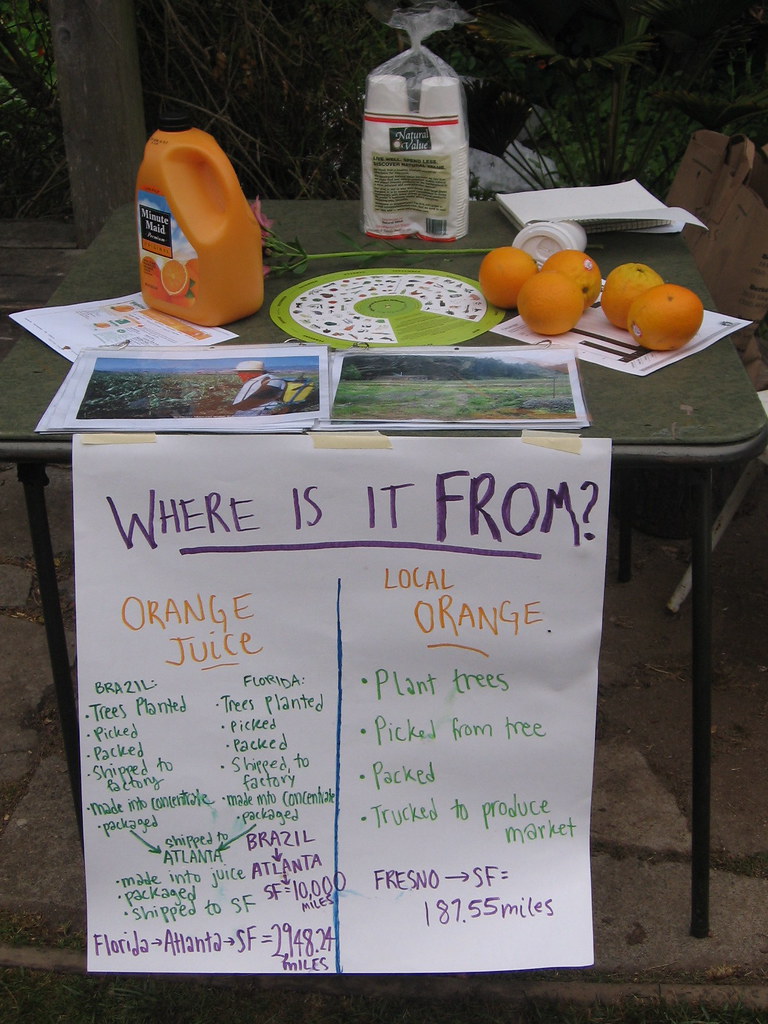
 Where Our Food Comes From: Ellie, Walter, Angel and their group compared the environmental impact of a locally grown orange to the impact of buying orange juice grown in Florida or Brazil, which is shipped, processed and shipped again, using petroleum resources all the way.
They calculated that a local orange grown in Fresno travels 187.55 miles to you, while orange juice travels from 2,948 to 10,000 miles, depending if it is grown in Florida or Brazil.
 The group gave us this statistic, from the CA Center for Public Health Advocacy, and they introduced us to the San Francisco Local Foods Wheel, a beautiful tool that tells you what locally-grown foods you can buy here and when they are in season.
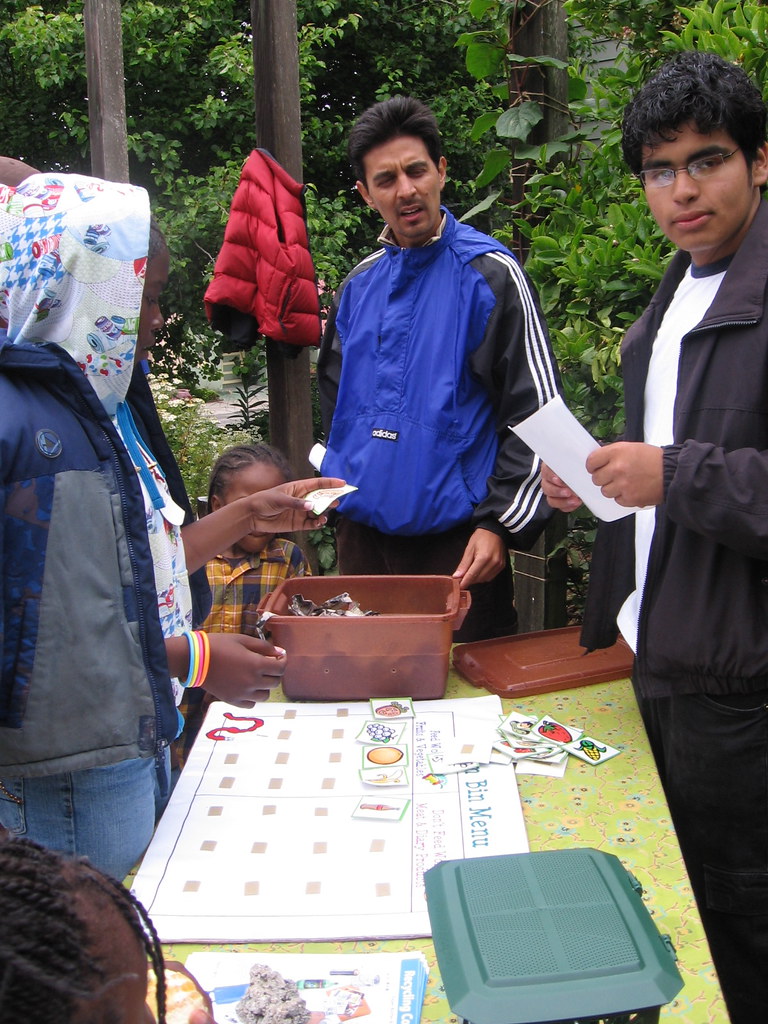
 Zero Waste: Last but certainly not least, Oscar, Alex, Ahmed and Kochise taught all the visitors how to divert waste from the landfill by recycling at home! They gave out green kitchen pails and the phone numbers to call to get your green bin and blue bin set up at home, so the City can collect your recyclables and compostables. Even more exciting, they gave out home worm bins and taught families how to compost food scraps without the waste even leaving home.
We ventured into the GFE's deep, dark worm bin to dig some fat, shiny red wrigglers for the visitors to take home. We even saw a couple of mating pairs!!
 The youth did such an AMAZING job teaching their families all about the garden. They gave tours, showed off the beds they planted, tasted, smelled and touched the now familiar plants with their younger siblings, and had fun in this beautiful green outdoor space.
A HUGE Thank You to all the youth and their families who participated in the Summer Program and our Last Day Garden Party. Thanks a MILLION to the wonderful youth staff (Claire, Ellie, Julius, Oscar and Antoine) who made it happen!!
We at Urban Sprouts are SO VERY appreciative of our partnership with the Garden for the Environment and the opportunity to work with Suzi and Blair! Thank you!!
For more photos of the Summer Program, click here.parents
youth garden
compost
nutrition
local food
zero waste