Showing posts with label organic. Show all posts

Friday, April 25, 2008

Food class visits Small Farm

Yesterday the June Jordan Food class took a trip to Hidden Villa ranch, an educational organic farm and ranch. As we drove by the farm fields near the ranch's entrance, a student yelled out, "Look! It's just like the small farms we learned about!" As in, small farms versus industrial farms. I was happy.

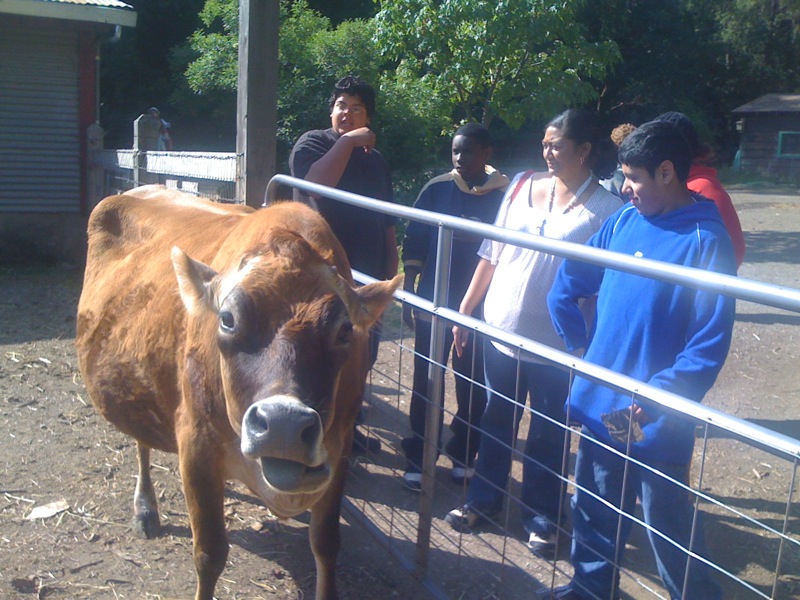
Another student had attended summer camp at Hidden Villa recently, at the program for 11-14 year olds. Mr. Olsson (pictured with cow) and I were both counselors there back in the olden days.

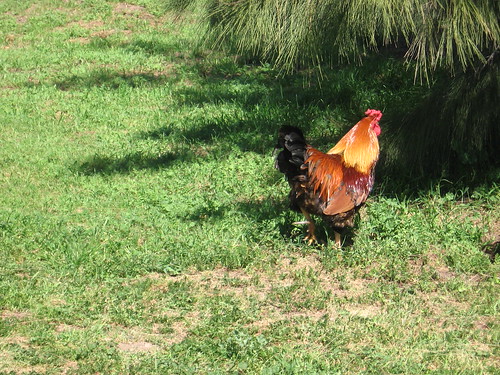
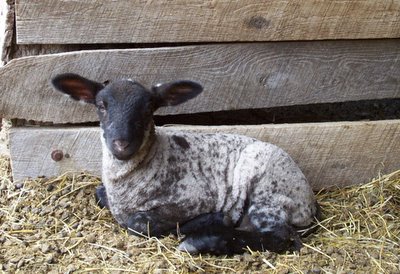
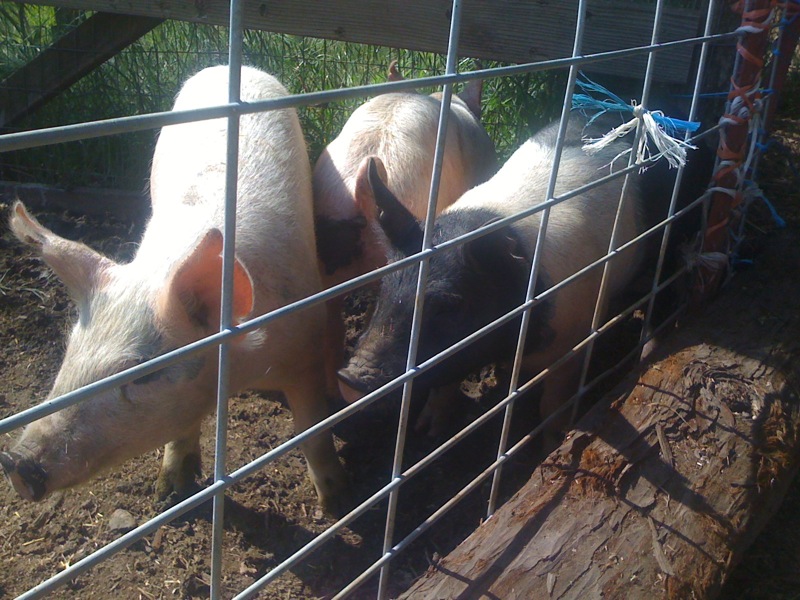
It turned out our group had a lot of knowledge of this place to share! We visited the cows, pigs, goats, sheep and chickens. We laughed a lot at animal antics! We walked in the woods and a student pointed out a banana slug! The garden was full of food crops, and gave us many ideas for crops to grow back at school.
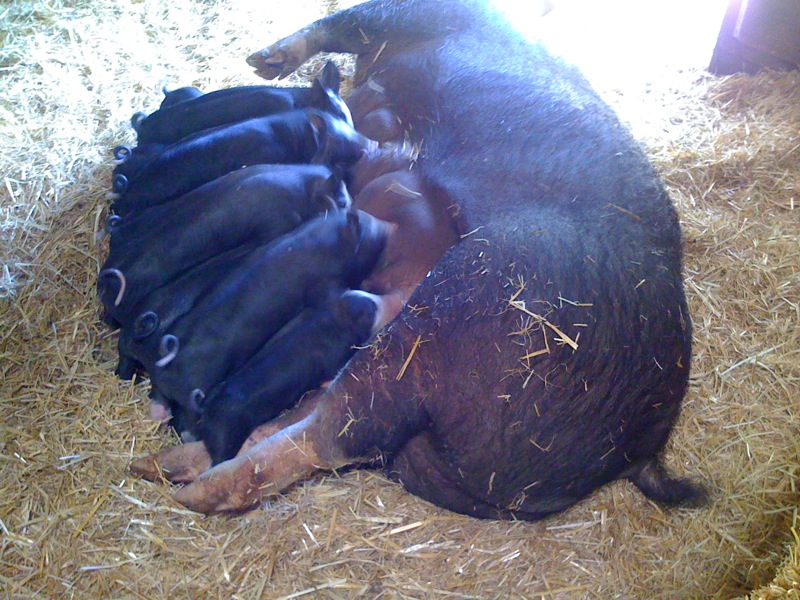
The baby animals were the CUTEST!! Most of all, we were excited to visit the chickens, to get ideas about our own chickens who will soon move in at June Jordan. First we have lots of work to do to get ready! The chicken coop at Hidden Villa, with its peek-a-boo nesting boxes, gave us some great ideas.
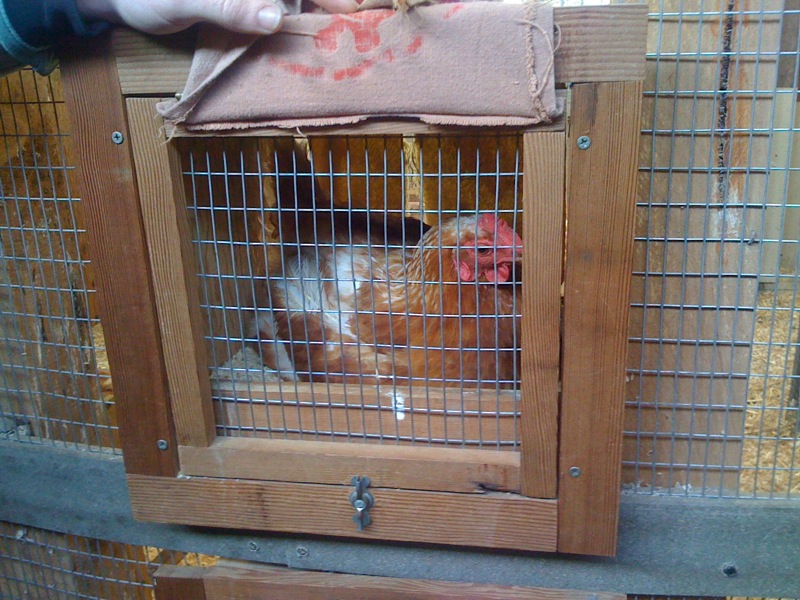

Click on the last photo to see more!

Friday, March 23, 2007

Farm Field Trip in Salinas

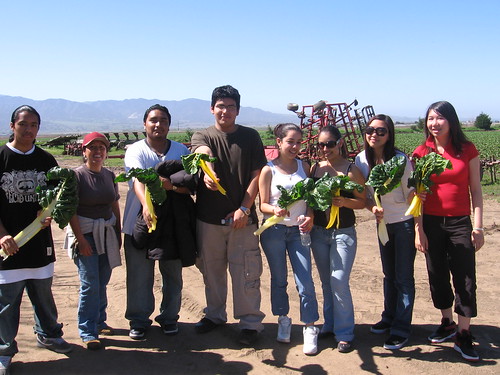
Last Friday the June Jordan Food class took a field trip! We had a fabulous time visiting ALBA, the Agriculture and Land-based Training Association in Salinas, CA.

ALBA offers a training program in organic farming that helps limited-resource farmers and farmworkers to manage their own sustainable farm buisnesses. Very inspiring. ALBA Organics is the marketing and distrubtion arm, that sells produce through a CSA and wholesale distributor.

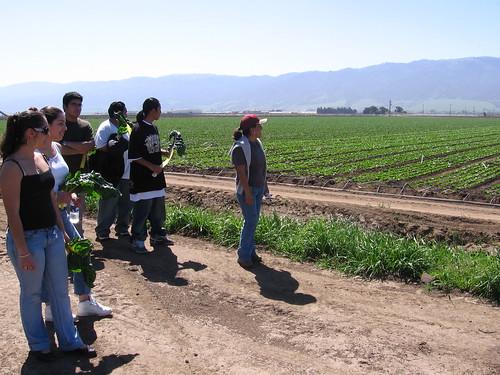
Our farm guide, Karina, a farmer from Peru, explained to us how the farm operates and the farming methods used. We walked on a road that forms the border between ALBA and the neighboring conventional/industrial farms.

To our left, conventional/industrial farms spread out for miles, as far as the eye could see, most of them dusty brown and empty of any crops (because it is March).
To our right, ALBA farmers' organic plots were lined with hedgerows of flowering trees and shrubs buzzing with insect life, and the fields were colorful rows with a diversity of crops, like ruffly purple lettuces, spiky green onions, and even some shiny red strawberries!
Karina showed us how ALBA uses hedgerows and interplantings (flowers planted directly in the rows among the crops) to attract beneficial insects like ladybugs and parasitic wasps that eat or kill the "bad bugs" that eat the tasty crops. The contrast was obvious - ALBA's hedgerows were the only trees or shurbs for miles in any direction. ALBA looked like an oasis surrounded by the desert of endless dusty brown conventional fields.

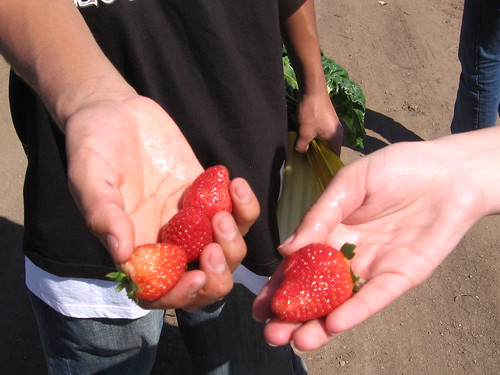
When our group spotted some shiny red strawberries, they went running . . . straight into the muddy rows that made some serious shoe-cleaning necessary later on. Anyway, we enjoyed the delicious fruit.

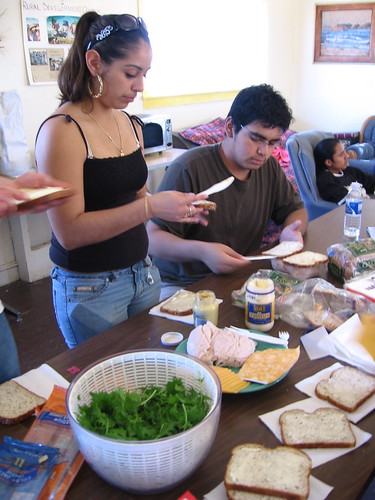
Our group visited the farm's cooler and distribution shed, where small trucks arrive to load up and take the crops to market. We ran into an old friend of Urban Sprouts, Martin Bournhonesque, who was packing up his famous arugula and other veggies to take to San Francisco's best restaurants and grocery stores (like Bi-Rite Market and NoPa Restaurant, also friends of Urban Sprouts!). Martin gave us a bag of fresh greens to eat on our sandwiches at lunch.
Our last stop was to visit the chickens, and then we got back in the car for the long trip home. It was great to get out of the city and have fun together in such a beautiful place! More pictures HERE.


Tuesday, December 12, 2006

Big vs. Small Farms: who wins?

For the last unit of the Food! class at June Jordan we compared the economics behind large industrial farms and small organic farms in the US. Our project may not be completely scientific, but it was extremely interesting.

We compared USDA data for the average "large" US farm - definied as a farm with over $250,000 of income. The USDA says there are 151,000 large farms in the US - this makes up 7% of all the farms, but 59% of all farm production. That means a small number of big farms are growing most of our food.

Then, we called up a small organic family farm to see how they measured up. Small farms (income is less than $250,000) make up 90% of all US farms. But organic farms are less than 1% of all farms - there are only 8,000 certified organic farms in the US.

So, we compared the annual financial statement for a large farm and a small, organic farm. Here is what we found.


Large FarmSmall Organic Farm
Total Income$1.4 million$76,800
Net Profit
$200,000$32,000
Amount of Government direct payment
$95,000$5,000
Profit Margin
14%42%
% of Costs spent on Fertility
7% (fertilizers and pesticides)
3% (compost)
% of Costs spent on Labor
8%26%
What do you think? Which is more productive?

Where would you rather raise a family? The small, organic farm is eating all its own food, and trading for other foods the family doesn't grow.
The large farm eats less than 1% of its own food - most of what it produces is only good for animals to eat or to be processed.

Pictures of another small farm by Farmgirl of the wonderful Farmgirl Fare.

P.S. Read Michael Pollan's The Omnivore's Dilemma to learn more about industrial farm production and small-scale farming.