skip to main |
skip to sidebar
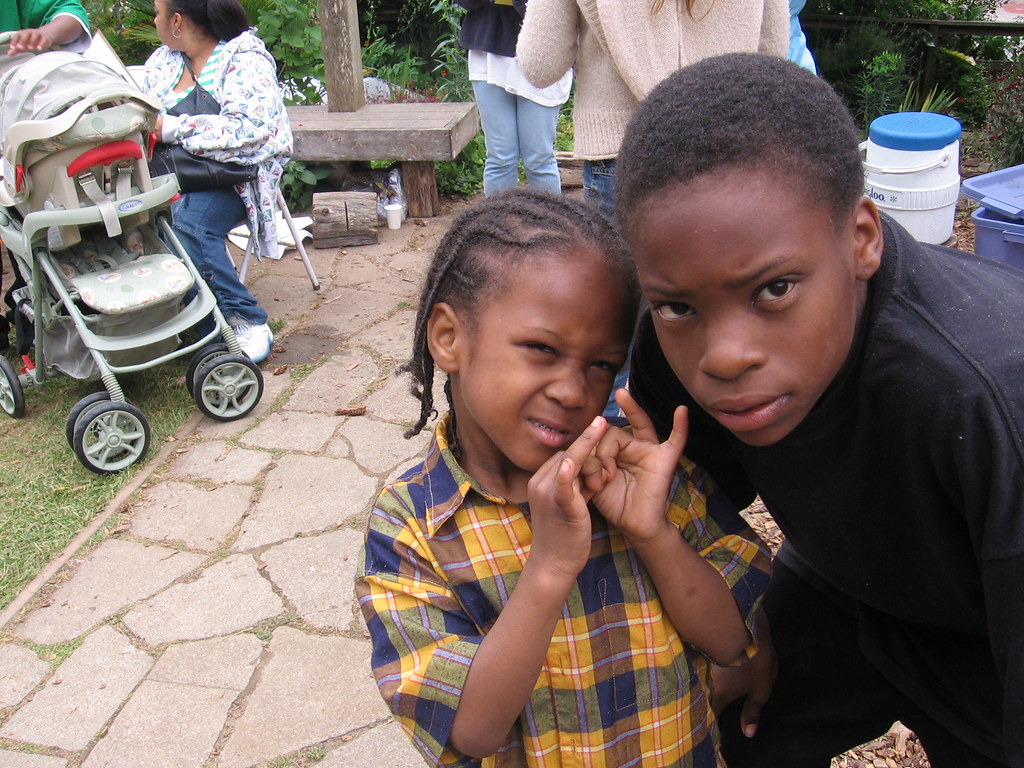
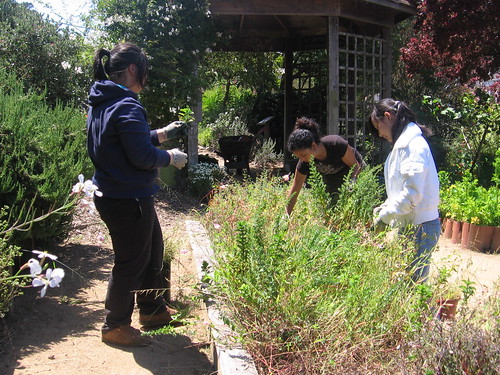
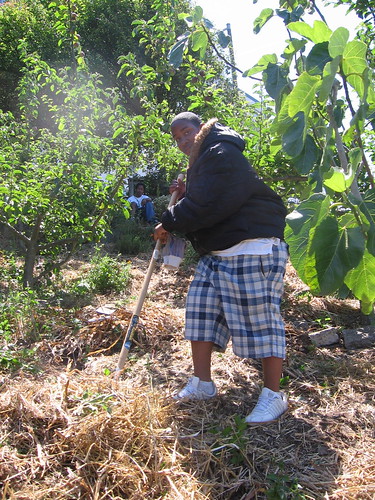
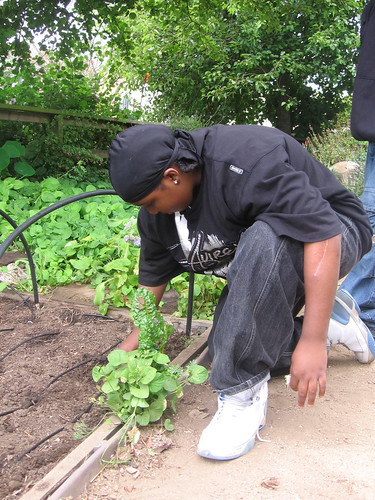
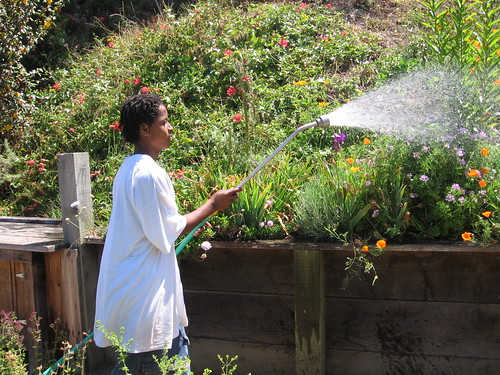
 Urban Sprouts' Summer Program at the Garden for the Environment is in full swing! We have more youth at work than ever before - 8 high school youth are leading the program for 18 middle school youth. We adults can now sit back and watch them go . . . The two youth Garden Managers set up and run all the gardening activities, and the rest of the youth staff and participants show off their cooking talents, gardening knowledge, and general ecological role model-ness daily. We are so impressed!
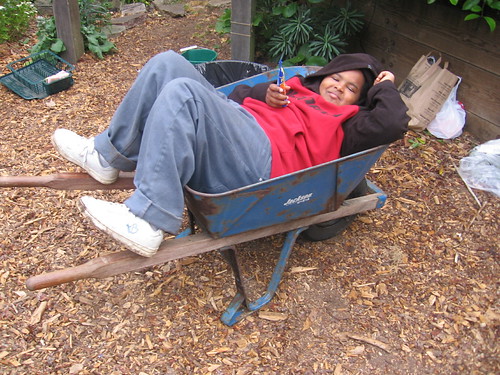
If only the whole world would follow the example of these amazing young people -- in their community-mindedness, their dedication to caring for the environment, and their desire to make the world a better place! Plus, this group of actors and comedians has me tearing up with laughter every day. Who can ask for more! A special shout out to our inspiring youth staff members Anthony, Augie, Jessica, Julius, Lupe, Michael, Sophia and Walter!
More photos HERE and HERE!!


 At our recent Garden Brunch fundraising event, we unveiled our plans for the coming year, and how, during this time of growing interest in school and urban gardens, we will share our expertise in garden-based education with more students, parents, and schools.
Read the address here. An excerpt:
We’ve gathered you all here at a time when economic crisis affects us all, whether you or your loved ones have experienced job loss, retirement dreams cut short, or belt-tightening in the household budget, even affecting your day to day food choices. Today, as we look for hope, comfort and meaning, we have a great opportunity to share the power in the simple act of gardening. Victory Gardens kept our country healthy and hopeful during early 20th century wartime and Depression, and our children grew 40% of our country’s produce right in their own school gardens.
With this inspiration, this year Urban Sprouts has launched a brand new program, our Family Farmers-in-Residence program. Read more here -->
Enjoy this excerpt from our recent Garden Brunch event, of a speech that laid out the past, present and future plans for Urban Sprouts' work.
Our Early Days to Now
This year, Urban Sprouts has worked with over 700 students, and supported school garden programs at six middle and high schools in San Francisco’s under-served neighborhoods.
The seeds of Urban Sprouts were sown five years ago, when educator Dr. Michelle Ratcliffe conducted her dissertation research on the benefits of school gardens at three middle schools in San Francisco. When I look back to 2003, it’s amazing to realize how far we’ve come. At Luther Burbank Middle School, we encountered a few solitary teachers striving to build a garden in a bleak and neglected school by scrapping together any resources they could find. Today, Urban Sprouts partners with six schools with thriving gardens, and the Obamas are planting vegetables on the White House lawn. Times have changed.
First, I’d like to share with you some of the ways that school gardens are so transformative for youth, families, schools and communities. I’m sure you’re aware of how much the obesity epidemic affects young people, even here in San Francisco. We hear from many youth in our programs that preparing meals from food they grew themselves dramatically improves their attitudes towards healthy foods and helps them make real changes in their eating habits. When students were asked about their eating habits in focus groups last year, in 78% of responses students said they eat more fruits and vegetables than before, and in 92% of responses they said they try to eat more healthy foods and less unhealthy foods. Some examples:
“I want to be eating more greens EVERYDAY, and less sugar. I plan on sharing my knowledge about nutrition with my parents and brother.”
“The garden helps you do better in school because it keeps you healthy.”
“I do better in school now because my body is not being energized with Cheetos, it’s being energized with lettuce!”
Also, by nurturing living things in the diverse garden ecosystem students also develop their desire to protect the environment. When students were asked about the environment in focus groups last year, in 53% of responses students said they care or worry about the environment more than they did before. Some examples:
“I’m worried more about pollution because we depend on nature to survive, to grow our food, our vegetables, and trees to breathe.”
“I plan to teach my family more about soil health, and how our health relates to the world's health.”
“I want to recycle more and compost instead of put it into the landfill.”
And my favorite quote of all:
“In the garden, I learned to grow up and be a successful person.”
So you see, school gardens can be life-changing for young people. But, there’s one catch. Not just any school garden will bring about these inspiring changes. What we do in the garden with youth matters.
That’s why Urban Sprouts’ school garden programs are different. We are guided by a research-based “recipe for success” that enables our school gardens to achieve big results. Dr. Michelle Ratcliffe has developed her dissertation research into a guiding framework for garden-based education. In other words, we’re not only measuring the outcomes or results of our program, we are measuring the “inputs,” making sure that every young person gets the highest quality education in the school garden.
Our Shared Future
We’ve gathered you all here at a time when economic crisis affects us all, whether you or your loved ones have experienced job loss, retirement dreams cut short, or belt-tightening in the household budget, even affecting your day to day food choices. Today, as we look for hope, comfort and meaning, we have a great opportunity to share the power in the simple act of gardening. Victory Gardens kept our country healthy and hopeful during early 20th century wartime and Depression, and our children grew 40% of our country’s produce right in their own school gardens.
With this inspiration, this year Urban Sprouts has launched a brand new program, our Family Farmers-in-Residence program. We’ll provide school families with resources and support to plant their own food gardens right on school grounds. The Farmers-in-Residence share their cultural crops and recipes with peers and grow fresh food to feed their own families. This spring, five family teams including moms, dads, grandmothers and children, have broken ground on their family garden plots.
School gardens can also drive the demand for food grown by local and sustainable farms, as we develop a committed base of consumers. Local agriculture creates jobs and puts money in regular people’s pockets, a true local stimulus package. Our neighbors to the north, in Oregon and Washington, are creating policies that turn their public schools into engines of economic growth, as a huge market for local farm produce. By planting home gardens and spreading the word about supporting local farms, we can keep our families healthy and sow the seeds of a sustainable future.
Urban Sprouts brings this message to youth and their families in San Francisco’s working neighborhoods, investing in the next generation of green consumers, green voters, and the green collar economy.
Now, we want to share our message and our successful methods with more youth, teachers, and communities. In the coming year, we will step forward as leaders in this movement. We’ll take our show on the road, providing a series of trainings with in-depth follow-up coaching for schools and community leaders all over California and the West. We’re making plans with partners from LA to Seattle, in urban food deserts where no grocery stores exist for miles, and in Central Valley communities that ‘export’ vegetables to feed our nation but leave their own residents hungry in a rural food desert. By sharing our experiences and learning from our neighbors, we can strengthen this healthy food movement at the grassroots level, outside the Bay Area bubble.
But you know what, there’s something else that makes Urban Sprouts special. It’s the reason we’ve invited you all here today, to get to know us in person. People like us, who take a stand for our beliefs and work tirelessly to lead and organize in our communities, we often feel loneliness and burnout even as we achieve victories in our work. As we step up our leadership and broaden our reach, Urban Sprouts is planning for not only the sustainability of our programs but the personal sustainability of our leaders and members. Through careful planning, we’ll ensure that our staff feel supported, we’ll collaborate to share our increasing workload, and we’ll continue to provide living wages and health benefits to all staff. With your investment, we will step forward as leaders in this movement, sharing our methods, our vision, and our integrity. Your partnership will make all the difference.
Thank you very much.
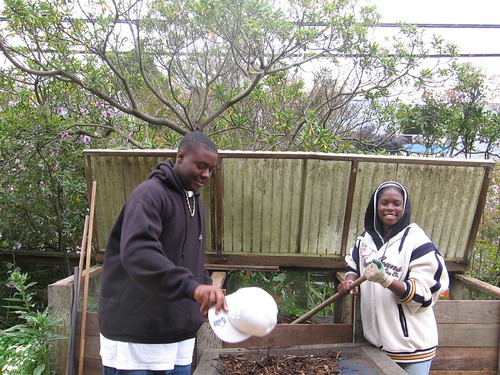
 We are having so much fun at the Urban Sprouts and Garden for the Environment Summer Program, now in the middle of our second week. The 21 youth—16 middle school youth and 5 high school youth staff—are working in the garden, cooking lunch from garden-grown produce, and learning all about organic gardening, recycling & composting, nutrition, and where food comes from!
Yesterday we took a field trip to Slide Ranch in Muir Beach, across the Golden Gate Bridge. There, we milked goats, handled chickens, and explored the gardens.
Check out our photos to see everything we've been up to!


San Francisco Chronicle's March 22nd paper featured a series of articles on urban farming. The many innovative approaches to growing food in an urban setting, such as school gardens, appear to be attracting the attention of city planners. The series ends with an invitation to us readers to share our own thoughts on urban farming with the Chronicle's Kitchen Gardener. Email them and share!
A brief but fascinating conversation with Dr. Rollin Coville, a UC Berkeley trained entomologist, led Urban Sprouts to the website for Urban Bee Gardens. For those of you interested in local and native pollinators, check it out! You can learn amazing information about bees such as:
- There are about 25,000 species of bees known worldwide.
- In the U.S. we have almost 4,000 species
- In California slightly more than 1,500 species have been recorded.
- In the East Bay cities of Albany and Berkeley 81 species of bees have been identified from residential neighborhoods.
You can also learn how to build your own Bee Garden!
Thank you Dr. Coville forguiding Urban Sprouts to this fun website!
 The last day of the Summer Program we hosted our most successful Garden Party yet! Youth participants in the program invited their families, friends and teachers to visit the Garden for the Environment and see all the amazing work the youth have done!! More than 75% of youth brought family to the garden - this is HUGE, compared to the less than 10% turnout we usually get for our garden parties during the school year. Teachers from MLK Middle School and June Jordan attended, as did Ross Mirkarimi, District 5 Supervisor.
What incredible work did the youth showcase at the Garden Party? Well, the youth taught us about . . .
 Soil Health: John and Julius showed parents how to save seeds from native plants at the GFE and to sow them in window boxes and home gardens. John gathered the seeds from the garden himself - he learned how to identify mature seed pods ready to be harvested!
Families took home seeds to grow swiss chard, native Hooker's Evening Primrose, and Foxgloves. You can buy window boxes like the ones we used at your local Cole Hardware, or make them from scrap wood like old dresser drawers!
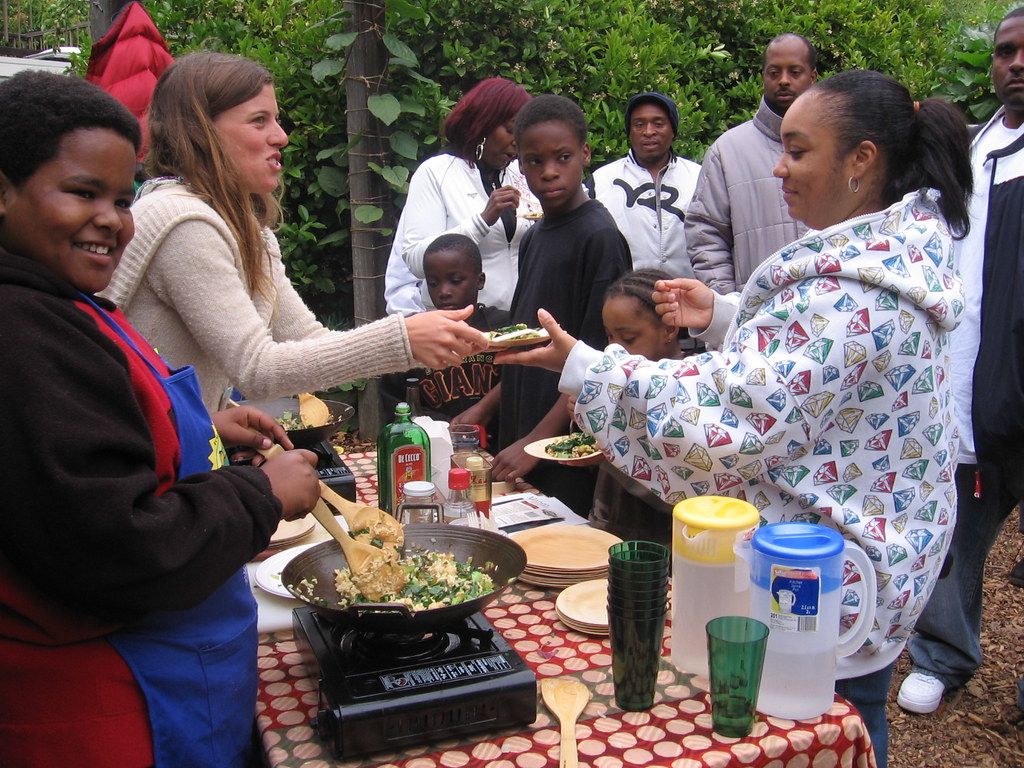
 Eating Healthy at Home: Muawattia, Andre, Delvin and Suzi harvested and prepared veggie stir-fry with rice for everyone, and served it up hot! Everyone enjoyed those fresh and healthy greens.
This group also made a poster listing these ways we can all make healthier choices:
- Exercise and eat healthy including: bananas, strawberries, greens, apples, sweet peas, collard greens
- Choose whole food over processed food. Why? Because you will know what is in your food that can help you and not kill you slowly.
- Replace sweets with another kind of healthy food.
- Check Food Labels before you buy foods.
- You should have no more than 48 grams or 12 teaspoons of sugar in one day.
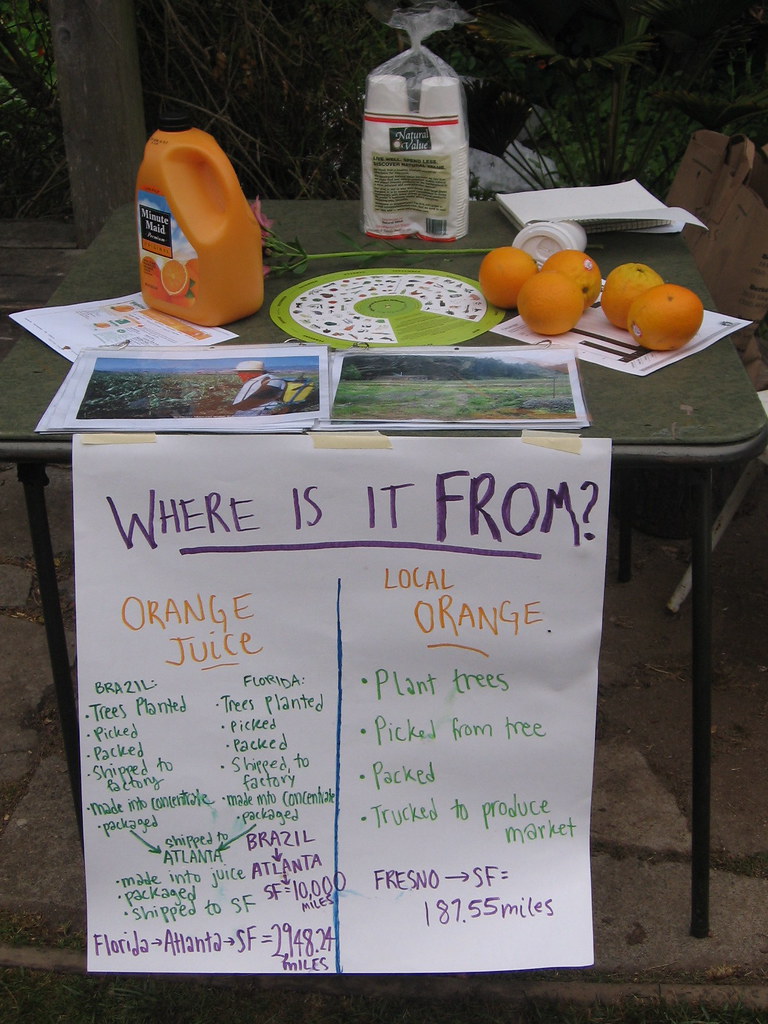
 Where Our Food Comes From: Ellie, Walter, Angel and their group compared the environmental impact of a locally grown orange to the impact of buying orange juice grown in Florida or Brazil, which is shipped, processed and shipped again, using petroleum resources all the way.
They calculated that a local orange grown in Fresno travels 187.55 miles to you, while orange juice travels from 2,948 to 10,000 miles, depending if it is grown in Florida or Brazil.
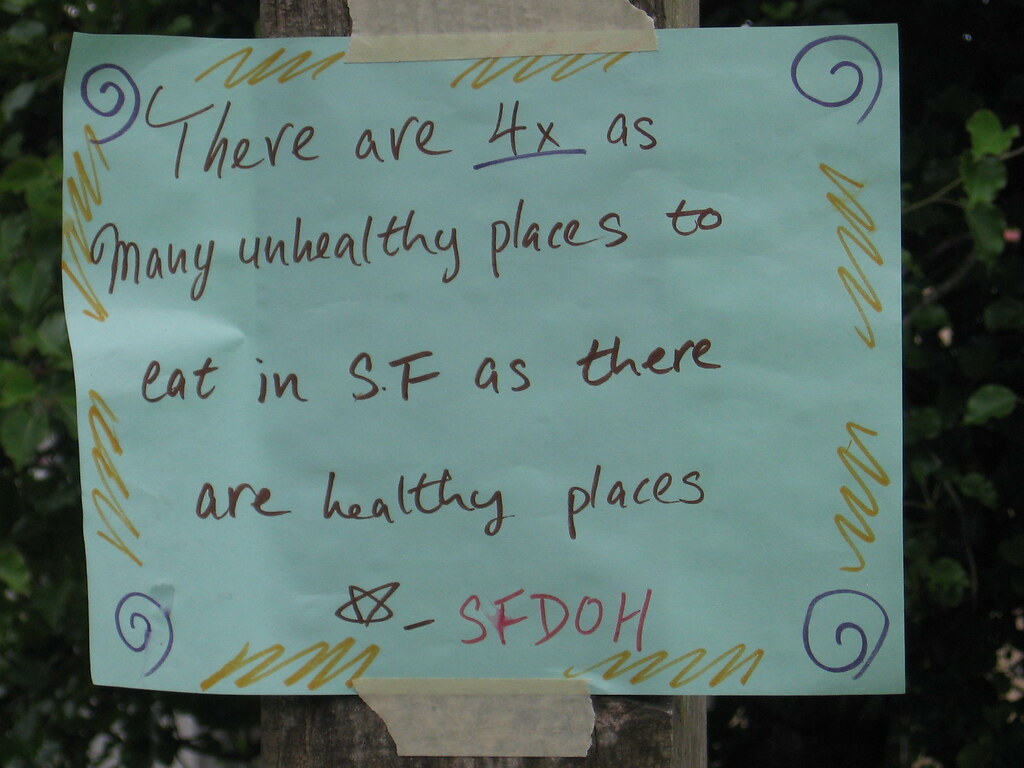
 The group gave us this statistic, from the CA Center for Public Health Advocacy, and they introduced us to the San Francisco Local Foods Wheel, a beautiful tool that tells you what locally-grown foods you can buy here and when they are in season.
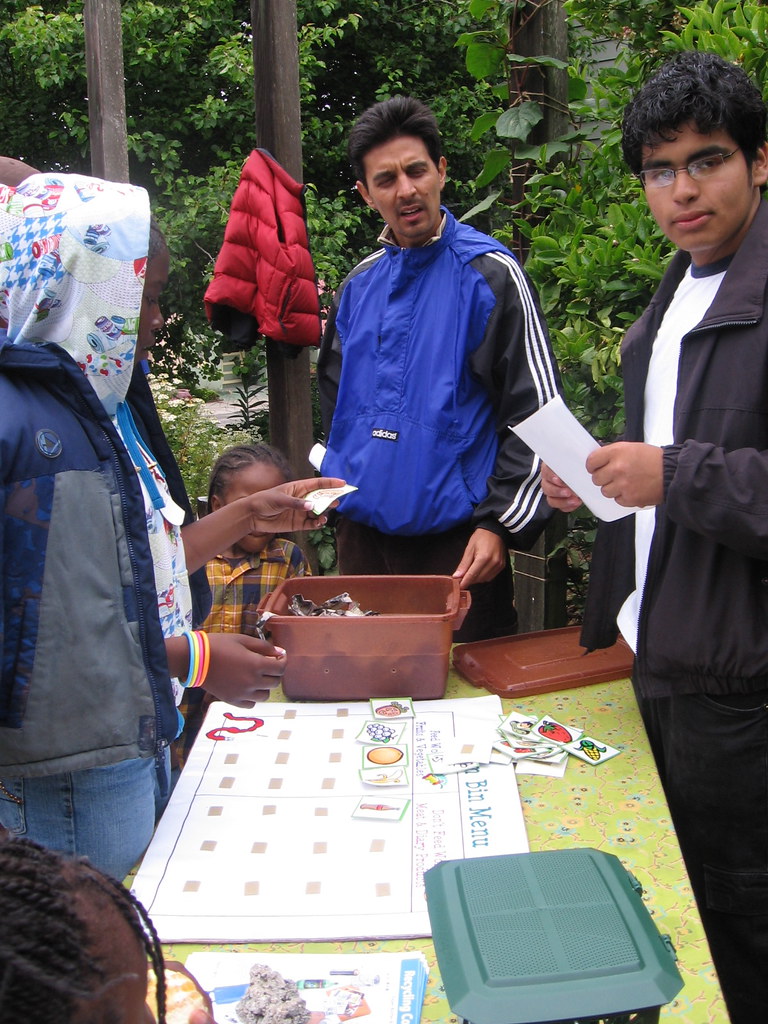
 Zero Waste: Last but certainly not least, Oscar, Alex, Ahmed and Kochise taught all the visitors how to divert waste from the landfill by recycling at home! They gave out green kitchen pails and the phone numbers to call to get your green bin and blue bin set up at home, so the City can collect your recyclables and compostables. Even more exciting, they gave out home worm bins and taught families how to compost food scraps without the waste even leaving home.
We ventured into the GFE's deep, dark worm bin to dig some fat, shiny red wrigglers for the visitors to take home. We even saw a couple of mating pairs!!
 The youth did such an AMAZING job teaching their families all about the garden. They gave tours, showed off the beds they planted, tasted, smelled and touched the now familiar plants with their younger siblings, and had fun in this beautiful green outdoor space.
A HUGE Thank You to all the youth and their families who participated in the Summer Program and our Last Day Garden Party. Thanks a MILLION to the wonderful youth staff (Claire, Ellie, Julius, Oscar and Antoine) who made it happen!!
We at Urban Sprouts are SO VERY appreciative of our partnership with the Garden for the Environment and the opportunity to work with Suzi and Blair! Thank you!!
For more photos of the Summer Program, click here.parents
youth garden
compost
nutrition
local food
zero waste