Thursday, February 28, 2008

Delicious and Meaningful

I am not easily ruffled by celebrity status. There are strata of celebrity and I am often challenged to distinguish who is who and from what they derive their importance. That said, I actually gawked the other day. I was officially star struck. Not so much by the mere fact of popular status but rather in what this gentleman was choosing to do.

It happened as I was enjoying a slice of heaven, also known as of Shaker Lemon Pie, at Mission Pie. Between mouthfuls (maybe even during), I was engaged in a lively conversation about sustainable food systems of course, when a lean fellow walked through the door. In the midst of conversation, one of my associates discreetly leaned forward and said, “notice the guy that just walked in…but don’t stare.” The man in question was at the counter so I was unable to notice him until he turned to leave. That was when it happened. Mid-sentence I stopped talking and took in the full glory of Mr. Benjamin Bratt.

While I do quite like Mr. Bratt’s acting and naturally, he is beautiful, what truly struck me was that Benjamin Bratt is customer of an establishment that melds the worlds of San Francisco food systems, environmental health, and sustainability with darn good pie. Apparently, he is an ongoing customer of Mission Pie.

Of all the places he could choose to go for a slice of pie in San Francisco, he chooses to support a community driven enterprise that “celebrate farmers, bakers, chefs, and all who work together toward a healthful food system.”
* Wow. This is a man of distinguished taste who in one fell swoop is supporting community food systems, sustainable farming and youth leadership…and who, when all is said and done, likes a simple and honest slice of pie.

This is what really got me. A person famous for their action is acting in support of his local community…he cares. For that brief moment I witnessed a meaningful personal act, not a big screen one, that spoke of an inner beauty that matches, if not exceeds, the outer.

Thank you for supporting the cause Mr. Bratt!

Tuesday, February 19, 2008

A Program Model for Garden-based Ed

A few weeks back I gave a presentation at the Network for a Healthy California Annual Conference in Sacramento. It was a chance to share with other nutrition educators a special strength of Urban Sprouts -- our "Model," something that has theory behind it, has been tested by research, and guides everything that we do. Why is this so special? Let me share a couple of the reasons why we use a program model.
  1. Not guessing what works – existing theory and the body of knowledge from multiple fields inform our work.
  2. A recipe for success – what ingredients we must add in order to get the outcomes we desire.
  3. Evidence of outcomes – Inputs and outcomes are tested by research and evaluation to show impact in the real world.
  4. A Measurement tool – The model guides all our practices, shows how well we’re doing, and tells us where to make improvements at every step.
Now, you may be wondering, what does this really mean, to have a program model?

Urban Sprouts’ program model was created by Dr. Michelle Ratcliffe. In fact, Dr. Ratcliffe's doctoral research project marked our beginning. The program model demonstrates the links between individual behavior changes that school gardens inspire and the larger impacts on families, schools and communities. The model is based on three elements: a young person’s internal strengths, the school and home settings around her, and her own actions, and, finally, how these three interact to create a healthy or unhealthy community. We don't think of the garden as an input and eating healthy as an output. Instead, the garden (an environment), a person's internal strengths, and a person's behaviors all reinforce each other to make people and the community better.
Specifically, Urban Sprouts’ school gardens give youth the knowledge and motivation to eat more fruits and vegetables (behaviors), as well as the ability to grow them (affecting the environment). Our programs also teach confidence and leadership (internal strengths) and help youth to identify problems in their communities – like a lack of fresh produce for sale at neighborhood stores – that are barriers to making healthy choices (environment). This program model shows that the garden goes beyond the individual to also have community-level impacts that create broader social change.

In more detail, our program model lays out all the elements that the school garden environment must have in order to actually impact students' internal strengths and their behaviors. These elements fall into three categories: the physical, curricular and social learning environments. Click on this simplified version of model (below) to see it larger.
Make sense? We have a fun and interesting presentation that lays out the theoretical background and engages the audience with the model in all its detail. If you're interested in learning more, drop us a line and it will help us plan future trainings for the public here in San Francisco.


Tuesday, January 29, 2008

SF, Take our School Food Survey!

If you are a San Francisco student, parent, teacher, principal, community organization, or taxpayer, your voice is needed on SF school food! Take our short survey now.

In 2003, San Francisco’s public schools created a ground-breaking Wellness Policy that led the way to boldly removing vending machines and junk food from our city’s public schools. Since then, federal m
andates have required that all districts create such Wellness Policies, adding power to the messages contained in ours.

Now, we have an opportunity to further raise the bar and to articulate what truly healthy schools for our city’s youth would look like! We have put together some possible additions to the SFUSD Wellness Policy—ideas gathered from other schools—including: encouraging more nutrition education through school gardens, more fresh produce that is locally grown, more recycling in the cafeterias, more opportunities for physical activity, and more connections between what students learn about healthy eating and the foods we offer at school. We want to connect the dots between a healthy environment, healthy youth, and our city’s schools!

We’ve created a survey that asks your priorities in these areas, including drafts of sample policies. These are just rough ideas so we need all the input we can get. We will share your priorities with the district’s Student Nutrition and Physical Activity Committee for consideration in revisions of the policy.

Click Here to take our Survey

Please take the survey as soon as possible – by this Friday or at least Monday if you can!

For some background on our involvement in this work, please read About Urban Sprouts: History.

Friday, December 28, 2007

Garden Greetings from Japan

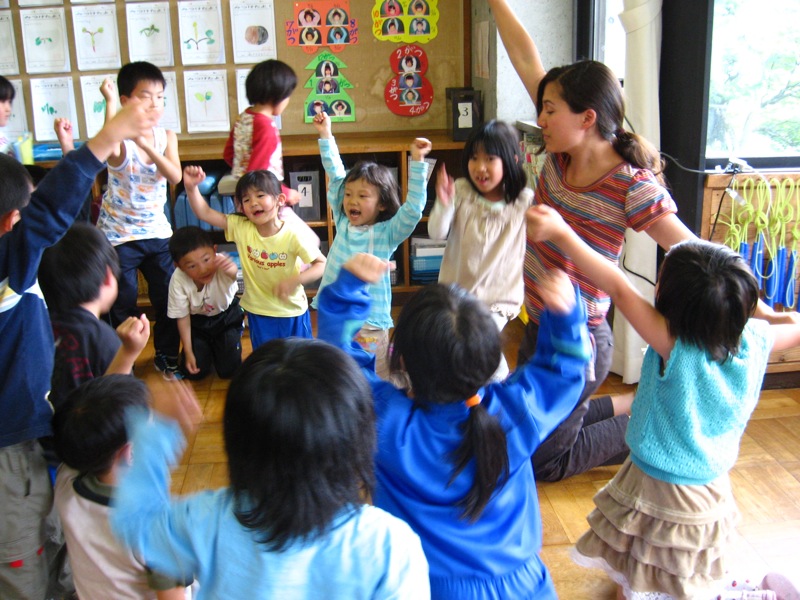
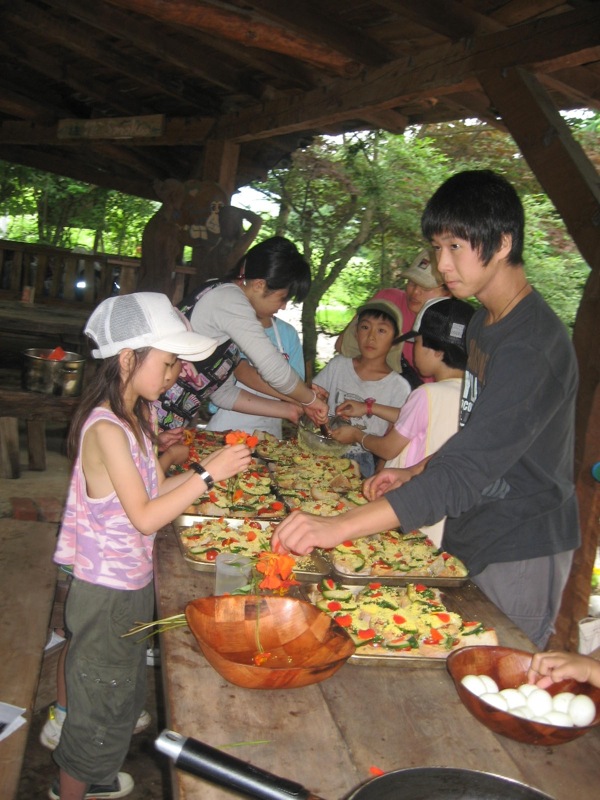
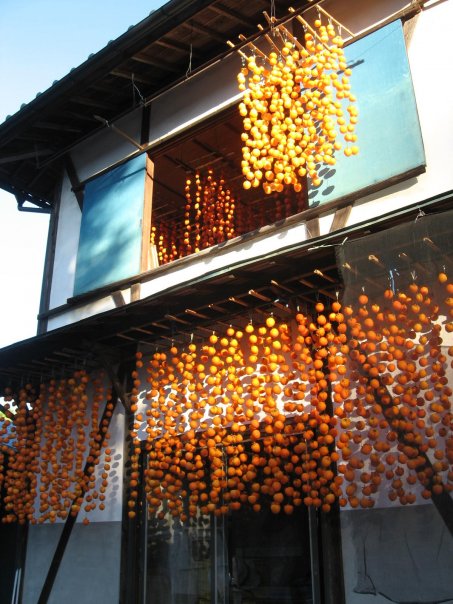
Urban Sprouts volunteer Zia Hrdy recently sent me this update on her adventures in Japan, where she lives and teaches. School gardens come naturally there! We miss Zia and look forward to her homecoming! She was an extremely dedicated garden volunteer at Ida B. Wells High School during 2005-06. Top photo is Zia with her first graders; below kids make garden-grown lunch; at bottom, persimmons drying.

The past year and a half in Japan has been wonderful. I've been living in a little farming village in the mountains of Nagano prefecture. I teach English at 1 junior high and 2 elementary schools and gardening is very much a part of school life here. Each grade level has its own little plot on school grounds, and the garden touches so many aspects of the curriculum here. The hallways are lined with chrysanthemum bushes grown by the first graders, sunflower seeds find their way into math classes, and popcorn has been popping into all the teachers' offices after being grown, harvested, and cooked by the fourth graders. Seasonal flowers are brought in by teachers from their own home gardens. There is always at least one vase full of flowers in the entry ways at school. Such a nice touch!

There seem to be no hangups about bringing food from the gardens straight into the mouths at school. The students put on their goofy gumboots, tromp out to the dirt and stick their hands right in! The harvest is divided among classmates or taken straight to the cafeteria kitchen. Last week, Japanese pumpkins were in school lunch every day after a harvest at one of the schools. This meant many variations on pumpkin soup, fried pumpkin tempura, and steamed pumpkin. One day, we spent a morning at elementary roasting sweet potatoes in a fire of dead leaves, and then by tea time we were devouring the soft sweet gooiness! The kids aren't even phased by cooking with weeds. Last spring, the 8th graders pounded rice with wild mugwort they had weeded from their plots and made fresh mochi. We also pulled purslane from the beds that day. The students were a bit surprised when I took it home to plant in my garden. They didn't know what great omelets it makes!

In addition to straying into the gardens during my free periods, I've been wandering into the hills and farm stands to find wild vegetables with new friends and teachers. So many strange delights! This year I've met all sorts of strange shoots and leaves – bamboo shoots dug from underground, translucent horsetails picked after the first rain, a dusty purple pod-bearing vine called akebi that makes interesting tempura, and more mushrooms than I have ever seen at the Ferry Building!

Winter cold is winding down the foraging and farming season though, and now everyone is working to preserve their produce. Chinese cabbages are split to reveal their curly centers and laid on planks to wilt before becoming kimuchi. The daikons are braided and hung for a few weeks before being turned to crunchy pickles. Long strings of persimmons hang and dry in enormous open barns – the buildings seem to actually glow orange just before dusk, they are so full of bright fruit. They'll soon be sticky sugary masses, akin to dried dates and good for naturally sweetening cakes!

—Zia Hrdy
Nagano, Japan, 2007


Wednesday, December 12, 2007

Updates from MLK Middle School!


photos: preparing a "winter fruit-root salad" and a bed of kale and chard!

As the days get shorter and cooler, we have been busily tending our winter crops at the MLK Middle School garden. We have kale, chard, bok choi, broccoli, romanesco, fava beans, beets, and carrots growing, which will make for a yummy feast once we get back from the holiday break! Last week we made some delicious “winter fruit-root” salads with lettuce, apple, pears, carrots, dried cranberries, and a lemon salad dressing made with lemons from our own tree. The students gobbled it all up, and some students asked for the recipe so they can make it at home!

In other news, we kicked off our new after-school “Garden and Ecology Club” by creating “worm hotels” and getting to know these wiggly friends up close and personal. Creating a small worm bin is a great way to continue to help your garden throughout the wintry months – just mix up your vegetable kitchen scraps with some red wiggler worms and newspaper, and come springtime you’ll have wonderfully rich worm compost to feed your plants!

I savor experiences like these – they are what make my work so much fun! In the few months since I started working with Urban Sprouts, I have been amazed time and time again to see youth transform when they are in a safe and nurturing garden environment. I have seen kids overcome their fears of dirt to learn how to make compost and maintain a worm bin. I have seen students with severe behavioral problems inside the classroom go out to the garden and eagerly cooperate with classmates and teachers. I have had students come up to me after trying new fruits and vegetables to tell me, “I almost never eat vegetables at home… can I have seconds?” I am already looking forward to the springtime of gardening and eating ahead!

Youth Garden Designers!

At the campus shared by Excelsior (middle school) and June Jordan (high school), behind the school garden lies a huge open field area currently used for nothing . . . but we are making plans!

This semester the Food class at June Jordan took the first crack at designing the new garden space. Students
listed elements we want in the new space, measured the space, and drew plans for their dream garden.

Inspired by the baby chicks and piglets we visited at Hidden Villa, the students incorporated a chicken coop and run into many of their designs. Lisa provided the garden design curriculum she's been working on, and teacher Mr. Olsson added a peer critique. Students used stickies to give feedback on each other's work.

Here are examples of students' designs (click on each one to see it close up for all the detail!):


Tuesday, December 11, 2007

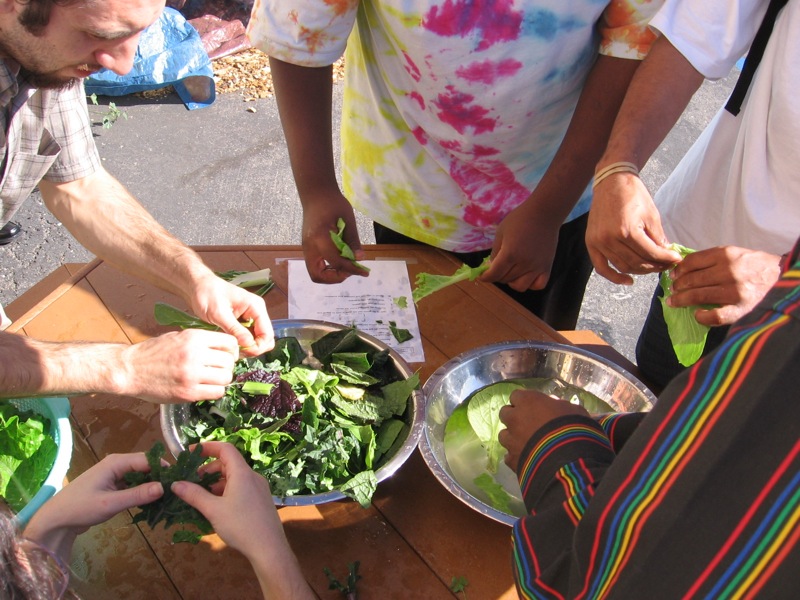
Ida B Wells' 5-Leaf Stir-Fry

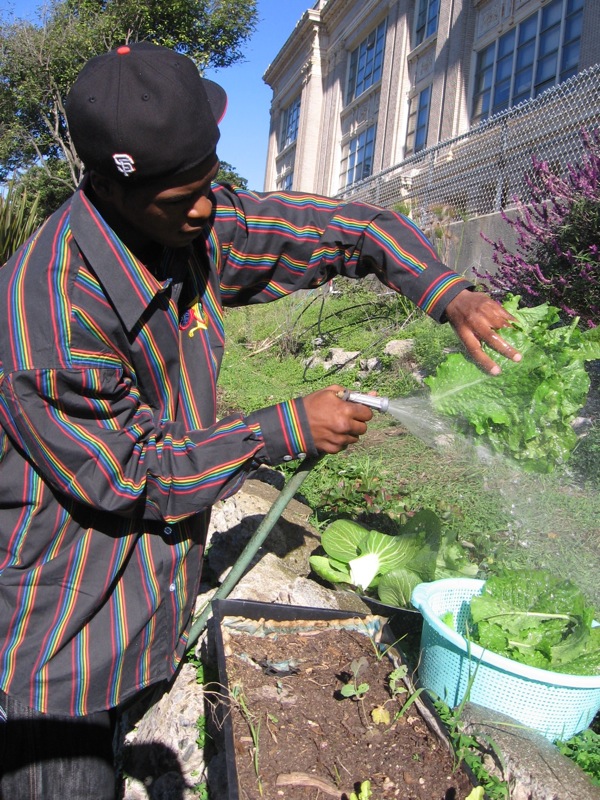
Ida B Wells High school students recently harvested 5 varieties of greens and 4 varieties of lettuce and prepared a meal showcasing the diversity of cool season crops! One student took these beautiful photos of her peers engaged in cooperative work:


Saturday, December 08, 2007

A Note on Generosity

Heading into the holiday season has me thinking about generosity. The holidays of the winter season invite us to take a moment to be deeply grateful for all the unique and inspiring opportunities, strokes of luck and amazing people we have had the fortune to encounter. Being in the spirit, I would like to take this moment to convey how moved I am by the work of our volunteers. Urban Sprouts has had the most generous volunteers helping us build our gardens, work with youth in classes and assist us with our ongoing research projects.

It is an amazing sight to see parents and other community members hauling mulch, digging beds and generally working with great patience to ensure that youth can grow vegetables in their very own school gardens. It seems to me there is no way to thank our volunteers enough. I am often humbled to wordlessness by their acts of giving. Yet, I try.

I would like to give a very special thanks to Molly, Sky, Jessica, Casey, Caitlin, the parents and neighbors of Aptos Middle School, the Sutter Health folks and our friends at Skywire Software for all their hard work! I thank you all for making this holiday season warmer and richer with your generosity.

Happy Holidays,
Esperanza