Saturday, July 28, 2007

Garden Planning at Ida B. Wells' Summer School

This past month, I worked with 30 summer school students at Ida B. Wells Continuation HS on a project to redesign and improve our garden. First we completed a mapping exercise, observing and plotting existing vegetation and garden features. Next, each student created a design of their "dream garden"; we encouraged them to be creative and envision what they could put in the garden that would contribute to the school. Many of the students added areas to sit and relax in the garden, which are sorely needed! Other features common to many of the designs were ponds and fruit trees. One very creative student wanted to put an outdoor seating area with a stage for the graduation ceremony! A couple of their plans:


We also went on a field trip to Garden for the Environment, so that students could see a well-established community garden and choose plants that they like. GFE was a big hit and gave us lots of ideas for how we can improve the school garden in the future. A few of the students were obsessed with the lamb's ear plants!

In our last week, we got dirty working in the garden and put in some improvements! We cleared out an unused slope adjacent to the vegetable beds, built a retaining wall out of recycled concrete and created a small habitat garden of perennials and California natives. We also planted some shade tolerant plants in another area of the garden, and painted garden signs for our vegetable crops!

Here is a photo of the habitat area we put in:

Friday, July 20, 2007

Summer Program Last Day Party!

The last day of the Summer Program we hosted our most successful Garden Party yet! Youth participants in the program invited their families, friends and teachers to visit the Garden for the Environment and see all the amazing work the youth have done!! More than 75% of youth brought family to the garden - this is HUGE, compared to the less than 10% turnout we usually get for our garden parties during the school year. Teachers from MLK Middle School and June Jordan attended, as did Ross Mirkarimi, District 5 Supervisor.

What incredible work did the youth showcase at the Garden Party? Well, the youth taught us about . . .

Soil Health: John and Julius showed parents how to save seeds from native plants at the GFE and to sow them in window boxes and home gardens. John gathered the seeds from the garden himself - he learned how to identify mature seed pods ready to be harvested!

Families took home seeds to grow swiss chard, native Hooker's Evening Primrose, and Foxgloves. You can buy window boxes like the ones we used at your local Cole Hardware, or make them from scrap wood like old dresser drawers!

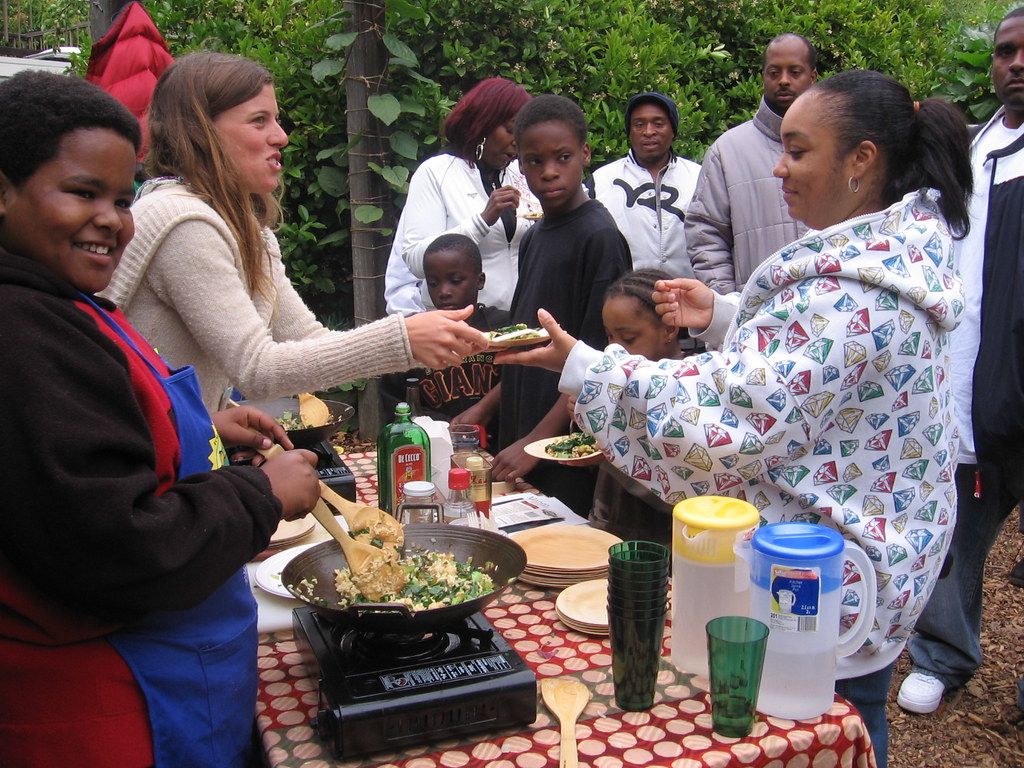
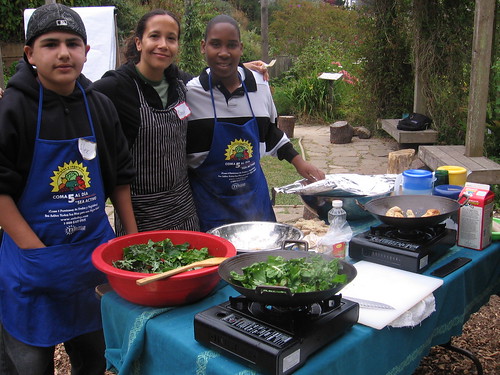
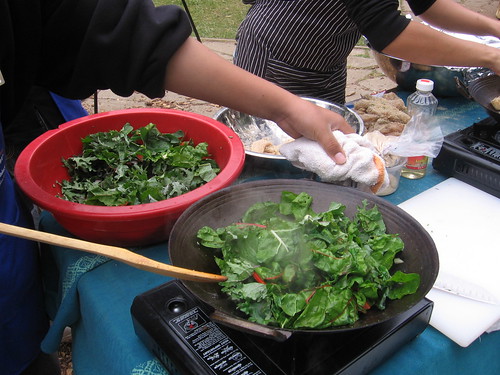
Eating Healthy at Home: Muawattia, Andre, Delvin and Suzi harvested and prepared veggie stir-fry with rice for everyone, and served it up hot! Everyone enjoyed those fresh and healthy greens.

This group also made a poster listing these ways we can all make healthier choices:
  • Exercise and eat healthy including: bananas, strawberries, greens, apples, sweet peas, collard greens
  • Choose whole food over processed food. Why? Because you will know what is in your food that can help you and not kill you slowly.
  • Replace sweets with another kind of healthy food.
  • Check Food Labels before you buy foods.
  • You should have no more than 48 grams or 12 teaspoons of sugar in one day.
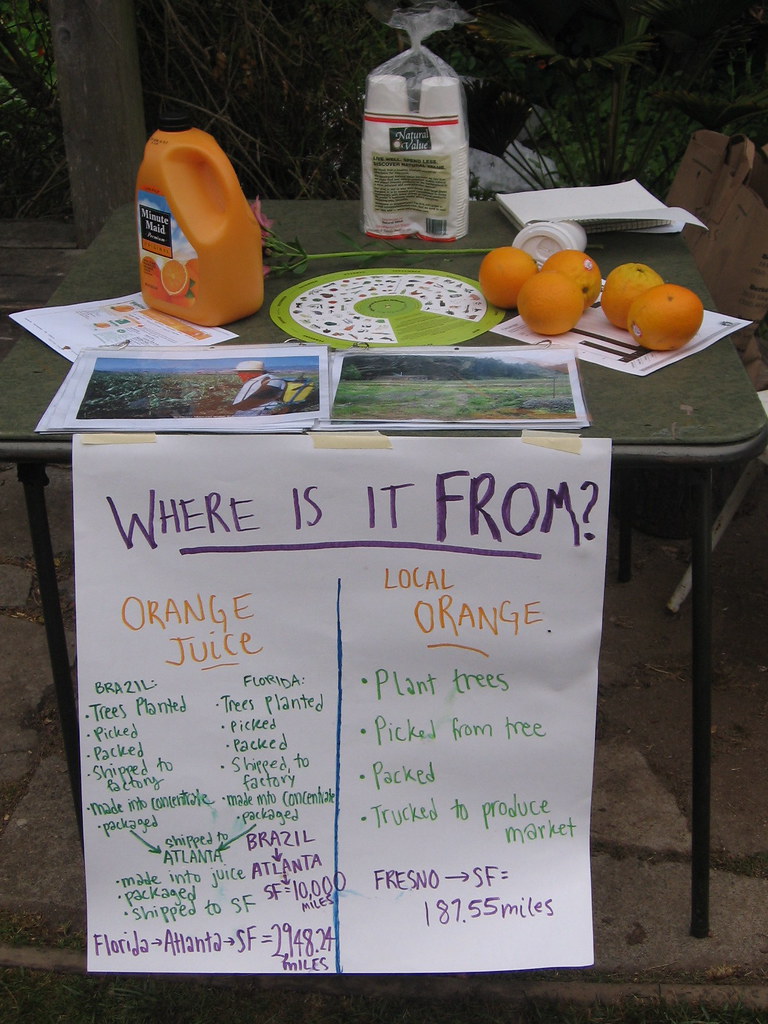
Where Our Food Comes From: Ellie, Walter, Angel and their group compared the environmental impact of a locally grown orange to the impact of buying orange juice grown in Florida or Brazil, which is shipped, processed and shipped again, using petroleum resources all the way.

They calculated that a local orange grown in Fresno travels 187.55 miles to you, while orange juice travels from 2,948 to 10,000 miles, depending if it is grown in Florida or Brazil.

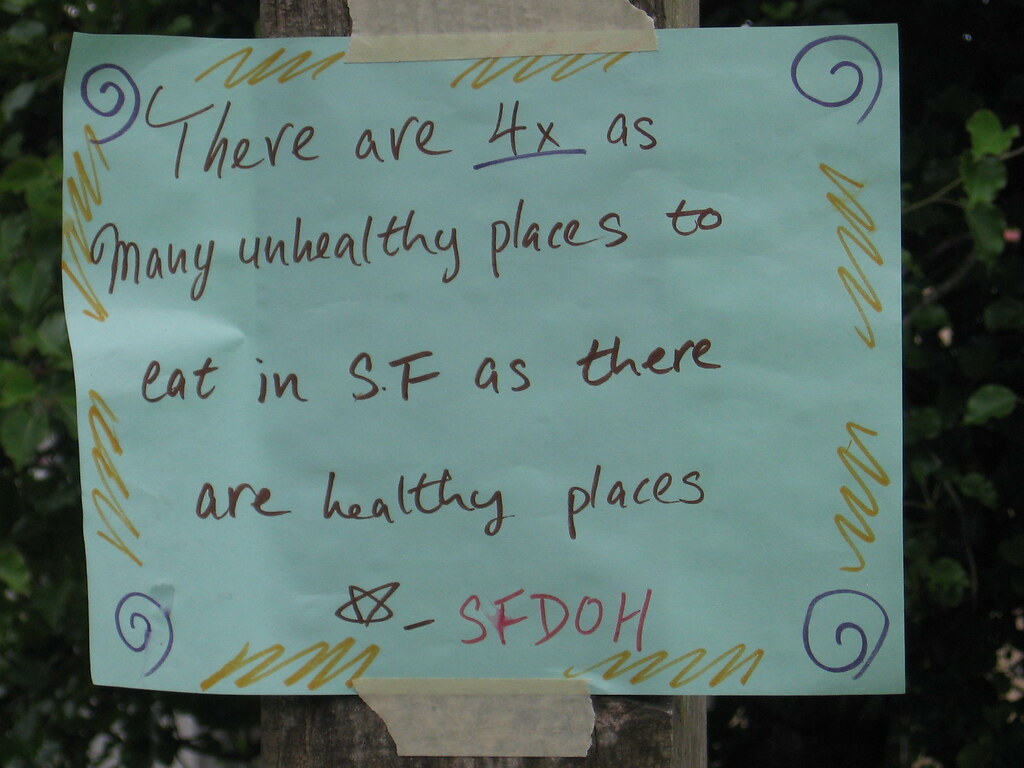
The group gave us this statistic, from the CA Center for Public Health Advocacy, and they introduced us to the San Francisco Local Foods Wheel, a beautiful tool that tells you what locally-grown foods you can buy here and when they are in season.

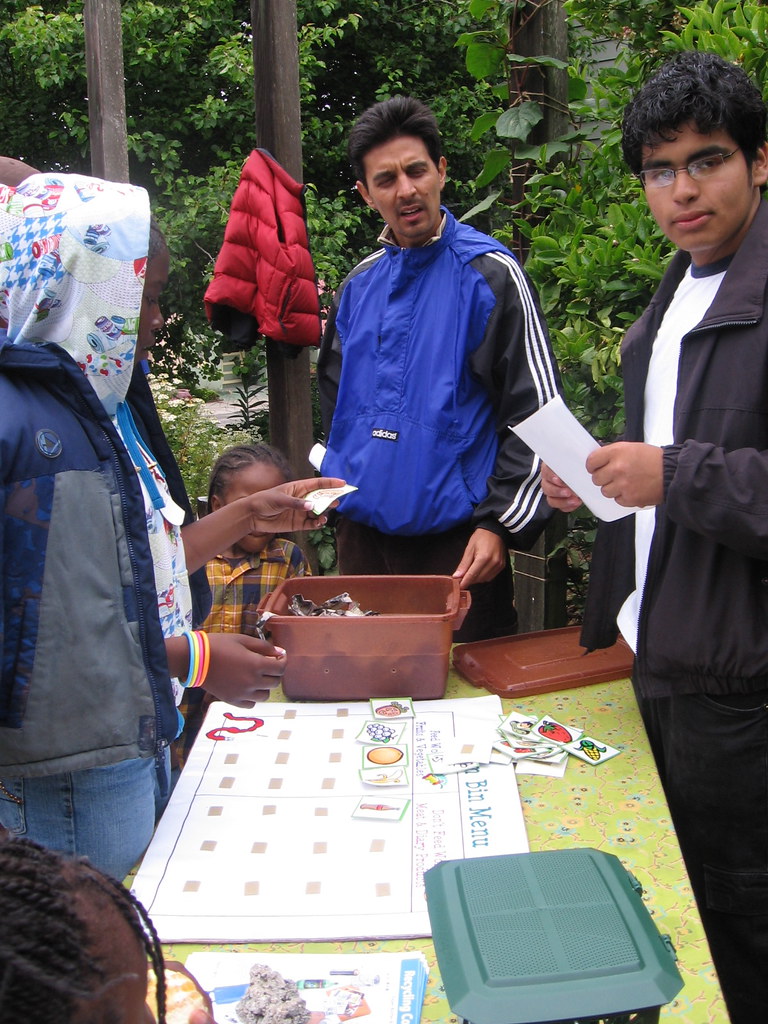
Zero Waste: Last but certainly not least, Oscar, Alex, Ahmed and Kochise taught all the visitors how to divert waste from the landfill by recycling at home! They gave out green kitchen pails and the phone numbers to call to get your green bin and blue bin set up at home, so the City can collect your recyclables and compostables. Even more exciting, they gave out home worm bins and taught families how to compost food scraps without the waste even leaving home.

We ventured into the GFE's deep, dark worm bin to dig some fat, shiny red wrigglers for the visitors to take home. We even saw a couple of mating pairs!!

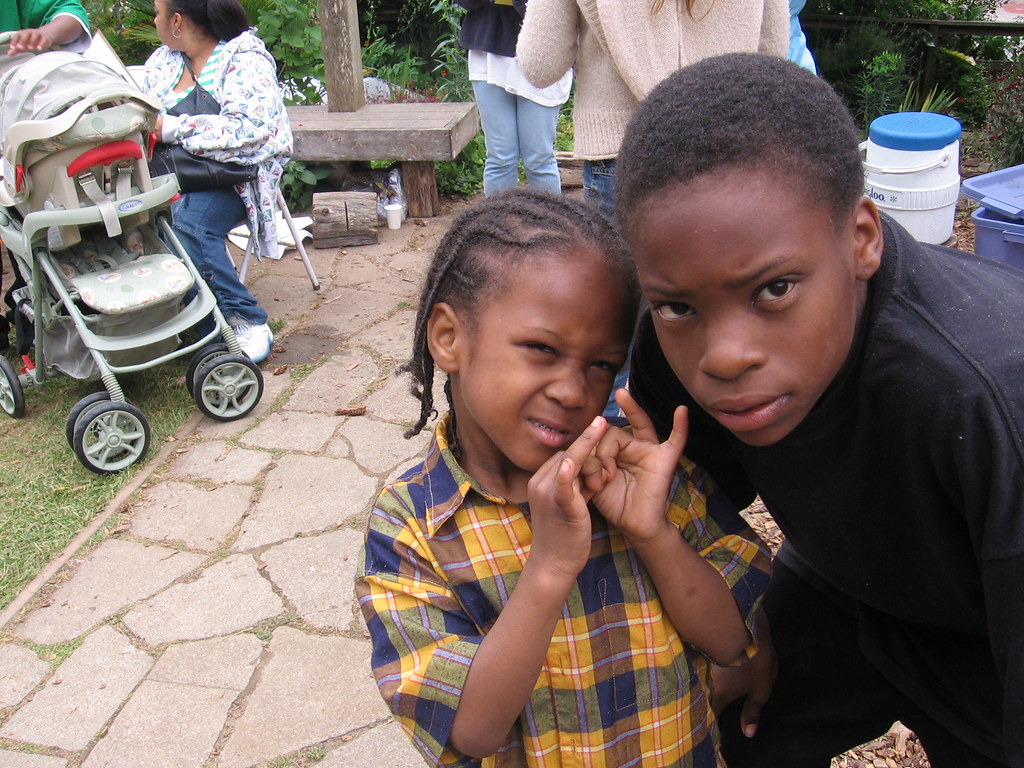
The youth did such an AMAZING job teaching their families all about the garden. They gave tours, showed off the beds they planted, tasted, smelled and touched the now familiar plants with their younger siblings, and had fun in this beautiful green outdoor space.

A HUGE Thank You to all the youth and their families who participated in the Summer Program and our Last Day Garden Party. Thanks a MILLION to the wonderful youth staff (Claire, Ellie, Julius, Oscar and Antoine) who made it happen!!

We at Urban Sprouts are SO VERY appreciative of our partnership with the Garden for the Environment and the opportunity to work with Suzi and Blair! Thank you!!

For more photos of the Summer Program, click here.


Wednesday, July 11, 2007

Summer Program . . . at Work!

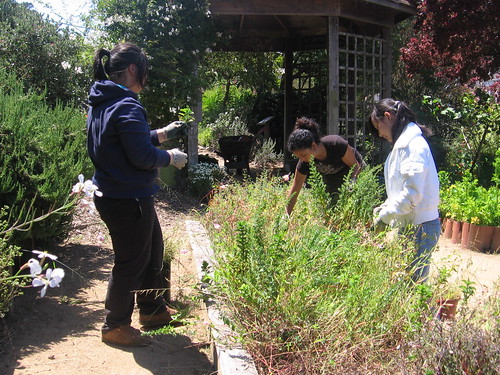
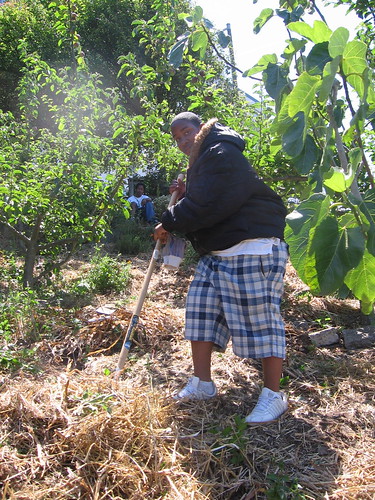
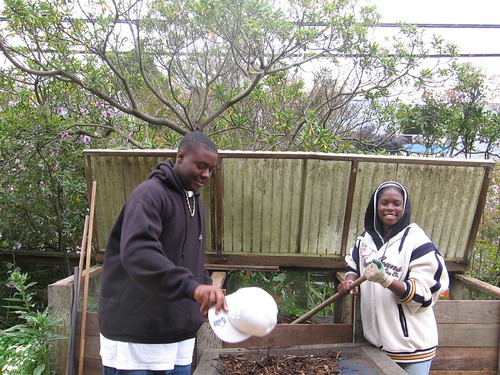
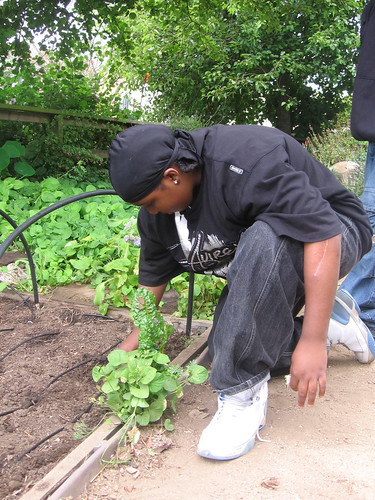
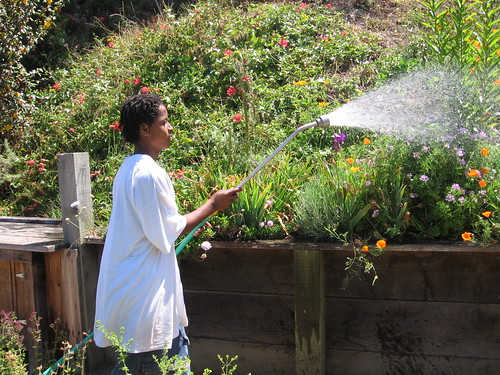
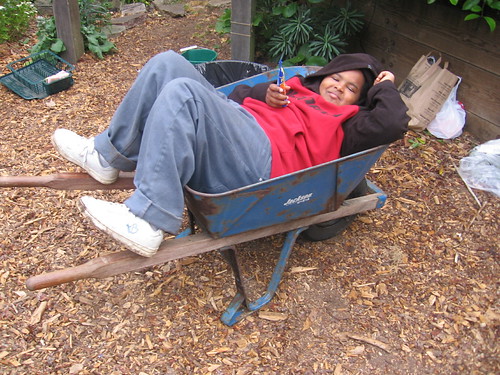
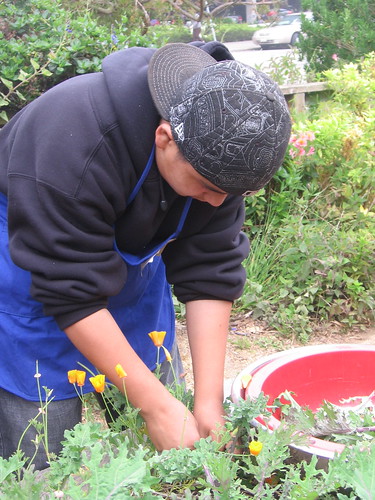
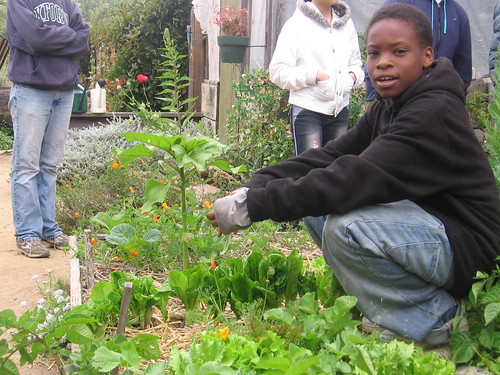
Youth in the Urban Sprouts & GFE Summer Program not only enjoyed the garden, learned, cooked, played and had fun, but they also worked hard!! Physical work can be so rewarding and makes your body feel strong and healthy. Here are some great photos of summer program youth hard at work in the garden!

Weeding & clearing:Preparing the Compost:
Sowing seeds:
Watering:
And . . . Relaxing!

Tuesday, July 10, 2007

Understand High Fructose Corn Syrup?

How can foods be labeled "All Natural" when a main ingredient is high fructose corn syrup? Read Britt Bravo's great recent post about this here: "When is Natural Food Natural?"

One of her readers offered these excellent links with more resources on understanding corn syrup:

Shaping Youth's counter-marketing campaign on Capri Sun ("liquid candy")
UCSF scientific article on the scary effects of fast food and high fructose corn syrup
Food Facts list of foods that contain high fructose corn syrup
Accidental Hedonist posts about high fructose corn syrup

And read this article about the Farm bill and corn subsidies from the SF Chronicle today:
The New Food Crusade


Tuesday, July 03, 2007

Youth Chefs are Cookin

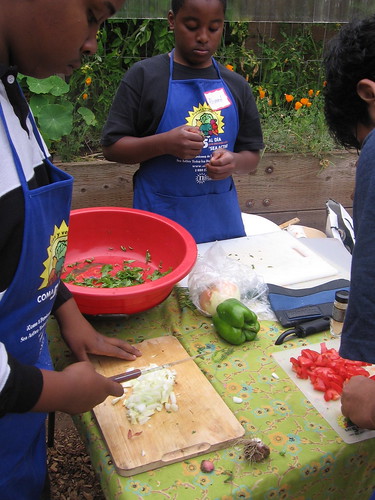
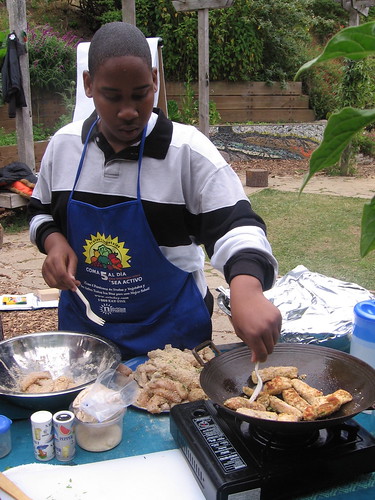
Today at the GFE Summer Program, we made a special meal. Rania from NextCourse visited the garden as a guest chef, and taught Ahmed, Alex, Kochise, Oscar and me to prepare this menu:
Garden salad with freshly made vinaigrette
Cooked greens with caramelized onions, garlic and vinegar
Breaded chicken tenders with housemade ranch dip
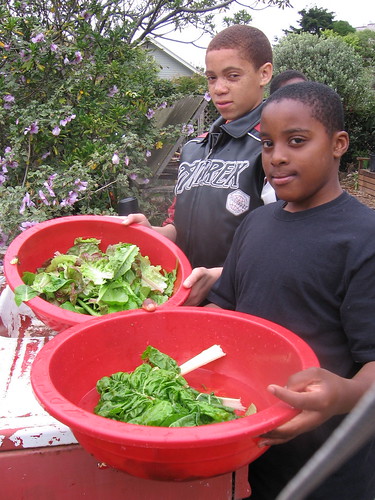
We harvested salad greens, kale, chard, garlic, parsley and oregano from the garden. (John helped us out a bit.)


Ahmed and Alex chopped all the herbs and veggies, while Oscar made the ranch dip.

Kochise breaded and seasoned the chicken pieces, and then he, Alex and Rania did all the frying!


I prepared the salad greens, and did dishes! Rania taught us how to chop with that professional technique. It was a delicious meal! One of our best yet! The recipe will be available in our summer program cookbook.

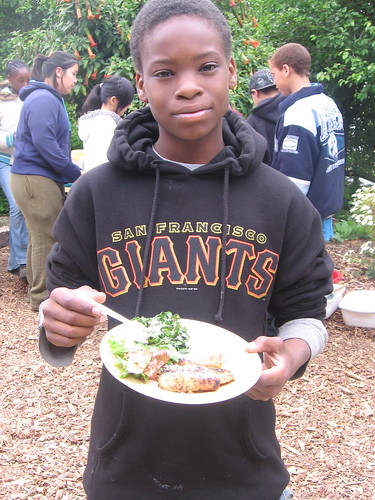
The finished product:


Saturday, June 30, 2007

Our Results: 2006-2007

Outcomes and Activities:
During the 2006-2007 school year, Urban Sprouts planned to reach 250 students in the 6th – 12th grades at four San Francisco public schools serving the city’s most under-served neighborhoods.

Urban Sprouts greatly surpassed this goal, reaching a total of 442 students this year. Urban Sprouts partnered with four schools: Excelsior Middle School, Martin Luther King Jr. Academic Middle School, June Jordan School for Equity, and Ida B. Wells Continuation High School. These schools serve San Francisco neighborhoods including the OMI/Excelsior, Sunnydale, Visitacion Valley, Portola, Bayview-Hunters Point, and Western Addition. Of students reached, over 60% were low-income students, 97% were youth of color, and 55% were defined as educationally disadvantaged by the San Francisco Unified School District.

In order to reach Urban Sprouts’ objective of providing hands-on garden-based education for 250 youth, spending at least an hour in the garden each week for 20 weeks, we provided the following activities at our four school sites.

In class Garden-based Education. Over 390 students participated in Urban Sprouts’ core garden-based education program that takes place during science classes. The garden-based classes meet for one hour every other week throughout the school year for a total of 20 hours of participation for every student. Each session is led by the Garden Educator and includes interactive academic learning and garden work. Every student experienced the full process of planting, growing, harvesting and eating crops from the school garden at least three times during the school year. By participating in the entire process, students have strengthened their positive preferences for eating a variety of vegetables.

An additional 28 high school students at June Jordan School for Equity participated in a semester-long elective course focused entirely on sustainable agriculture and food production. This garden-based curriculum included weekly lessons that took place in the school garden, curriculum on nutrition, food production, distribution and marketing, food policy, farm economics, and the environmental impact of agriculture, as well as a field trip to ALBA Organic Farm in Salinas, California.

Garden-based Youth Leadership. We partnered with teachers and students to identify leadership opportunities for smaller groups of 10-15 students, to engage more intensively with the garden and to lead related school-wide activities. These opportunities involved 25 students:
  • Excelsior Middle School: Fifteen students in Urban Sprouts’ after school program created, implemented and evaluated a school-wide recycling program. Students led a waste diversion campaign that included posters, a skit, monitoring recycling bins at lunch, and calculating the school’s waste diversion percentage, with support from San Francisco’s Department of the Environment.
  • June Jordan School for Equity: Students from the “Food!” elective course at JJSE hosted a meeting with the SFUSD Nutrition and Food Services Director to discuss avenues for improving school lunch at the Jordan/Excelsior campus. A group of parents and students from both schools picked up this effort and will continue to pursue improving school lunch with support from Urban Sprouts during the 2007-2008 school year.
Events. During the 2006-07 school year, Urban Sprouts hosted these youth-led community-wide events to build involvement in the garden program:
  • Salad Days: students at both middle schools harvested, prepared and served school-grown salads to the entire school at lunch;
  • Garden Work Parties: students and staff at each school hosted a celebration of garden work, harvesting, cooking, and other activities, attended by students, families, teachers and community members.
Volunteers. Urban Sprouts recruited community members to volunteer in teachers’ classrooms, which lowered the youth-adult ratio from 25:1 or higher to as low as 5:1, during garden-based activities. In total, 17 volunteers provided over 155 hours of support to students in the garden.

New Summer Program. As a result of Urban Sprouts’ cultivation of community partnerships during the year, we developed a new summer opportunity for the youth we serve during the school year. Urban Sprouts partnered with the Garden for the Environment (GFE) to host a two-week summer program for 21 youth, meeting for four hours each day at the GFE. Urban Sprouts trained and supervised 5 high school students who served as staff for the 16 middle school-aged participants. The Summer Program included: daily garden work; an intensive curriculum on gardening, waste diversion, nutrition and sustainable agriculture; daily harvest and preparation of a healthy lunch, and the creation of a culminating event in which youth shared their learning with their families and friends and created take-home actions to apply their learning at home (examples included kits for home recycling, composting, and gardening).

During 2006-07 Urban Sprouts was able to offer more programming to more youth than we originally anticipated. We raised additional funds for the year, a substantial portion from the California Nutrition Network, and were able to hire two additional part-time Garden Educators, Marcus Gallegos and Herman Yee.

Evaluation and Outcomes:
Urban Sprouts’ stated activities included conducting surveys and focus groups to determine the degree of students’ new knowledge, attitudes and behaviors after participating in our programs. Urban Sprouts’ objectives included increases in students’ ecoliteracy, environmental awareness and preferences for consuming fruits and vegetables as a result of participating in our programs.

This spring, Urban Sprouts implemented a survey questionnaire, student focus groups and key informant interviews after completion of our programming. This data is currently being analyzed by Urban Sprouts’ Evaluation Specialist, Michelle M. Ratcliffe, Ph.D. We will share our results on our website as soon as they are complete.

Currently, we have results of Urban Sprouts’ program evaluation conducted by Dr. Ratcliffe from 2004 to 2006 in our middle school programs. We have exciting results to share. Urban Sprouts’ evaluation showed that the garden-based learning experiences:
  • Influenced the school’s curricular, physical and social learning environments.
  • Affected students’ environment-related skills and knowledge, and attitudes and preferences towards the environment.
  • Provided opportunities for students to begin to make sense of the natural world and their relationship to it.
  • Influenced students’ social and moral development including strengthening their resiliency traits of pride, patience, hard work, team work, and motivation.
  • Influenced students’ willingness to try new foods, decreased their consumption of less nutritious foods, and increased their physical activity level.
  • Participating students increased their preferences for a variety of vegetables, the variety of vegetables they eat and how often they eat them.


Wednesday, June 27, 2007

Summer Soil Exploration

Welcome to the Summer Program! So much has happened in our first week enjoying San Francisco's beautiful Garden for the Environment, together with 16 youth from middle school and 5 youth staff from high school. Some major highlights for me are watching the youth staff teach the younger youth to garden, enjoy nature, and try crazy new foods ("You picked that from a tree!?!") My favorite quote from the week was, "This is the first time I've eaten a healthy breakfast AND a healthy lunch!" We've got these youngsters eating granola for breakfast and salad for lunch, every day for two weeks!

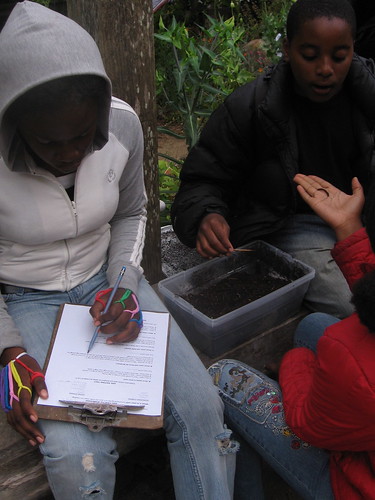
Here are some photos of our first few gardening workshops on Soil Health. Youth staff led the younger youth in small groups, exploring four different soils up close and personal. They checked the soils for crumbly texture, moisture, air pockets, and number of living things (decomposers!). The youth compared the soils, and chose which they would prefer, from a plant's perspective.

Here are the four soils: the native sandy beach soil, pure compost straight from the worm bin, and two samples of garden soil from different spots.


Stay tuned for more about our summer gardening adventures!

Monday, June 18, 2007

About Urban Sprouts

Mission
By cultivating school gardens in San Francisco’s under-served neighborhoods, Urban Sprouts partners with youth and their families to build eco-literacy, equity, wellness, and community.

Our gardens help students become more engaged in school and connect with food, the environment and each other. Our activities include:
  • School gardens and nutrition education: This year we’ll reach over 750 middle and high school students at seven schools: Aptos Middle School, International Studies Academy, June Jordan School for Equity, Martin Luther King, Jr. Middle School, SF Community School, Ida B. Wells Continuation High School, and Log Cabin Ranch (part of San Francisco’s juvenile justice program).
  • Farmers in Residence program: The Farmers in Residence program involves school parents in the school garden and supports them to grow their own food. Each family in the program tends a garden plot and receives materials, training, and a modest stipend.
  • Urban Sprouts & Garden for the Environment Summer Program: Since 2006, Urban Sprouts has partnered with Garden for the Environment to provide an intensive summer gardening and leadership program for youth.
  • The Garden-Based Education Model and Training Initiative: Since our beginning, Urban Sprouts has used a research-tested and theory-based model to guide all our programs. In 2009, we’ll share our methods and research results throughout California and the West through training, coaching, and web-based tools.


View Larger Map

History
Urban Sprouts grew out of a doctoral thesis project conducted at Luther Burbank Middle School during the 2003-04 school year. At the end of the study, teachers asked the research team to stay on and help make the school garden a sustained program at the core of the school’s curriculum. In our first year, 100 youth worked in the school garden, and we have since expanded to support school garden programs at six middle and high schools. Since 2003, over 3,100 youth have benefited from hands-on garden learning by growing, harvesting and eating their own vegetables.

From the beginning, we've seen that family involvement is key to improving youth health and ecoliteracy. While youth in our garden-based education programs now want to eat more fruits and vegetables, without access to fresh produce at school and at home, our work was incomplete. In 2005 we began developing strategies to draw families into our school garden work, to engage families in strengthening their children's schools, and to partner with families to change the food environment at school, in our neighborhoods, and at home. In 2009, we kicked off our Farmers-in-Residence program, to involve school families in the school garden and enable them to grow their own food right at school. We also continue to support efforts to make school meals healthier, fresher, and more sustainably-grown.

Garden-based Education Model
To provide high-quality garden-based education, Urban Sprouts bases all programming on a research-tested and behavior-driven model that includes these elements:
  • We help youth go beyond knowledge and attitudes to affect youth behaviors of nutrition, physical activity, and environmental responsibility;
  • We provide an adequate number of hours of experience to impact behaviors;
  • We engage students in the entire process of growing food from seed to harvest to table;
  • We build a collaboration of students, teachers, administrators, staff, and parents to improve student health through community involvement and community-wide events;
  • We evaluate and reflect on our work as an organization and with schools to continually improve our programs and show our results.

For more about the theory and details of the Program Model, click here.

Our Funders: